Steel erection tools support structural steel work from layout and lifting to fastening, welding, and inspection. The right mix of hand tools, lifting systems, and safety gear helps crews work with control while keeping each phase tied to the project plan.
At Henry H Construction Inc, we bring two decades of field experience to projects across Indianapolis and nearby areas. Our team selects tools based on structure size, site access, member weight, and work sequence.
Core Tools That Support Safe Structural Steel Work
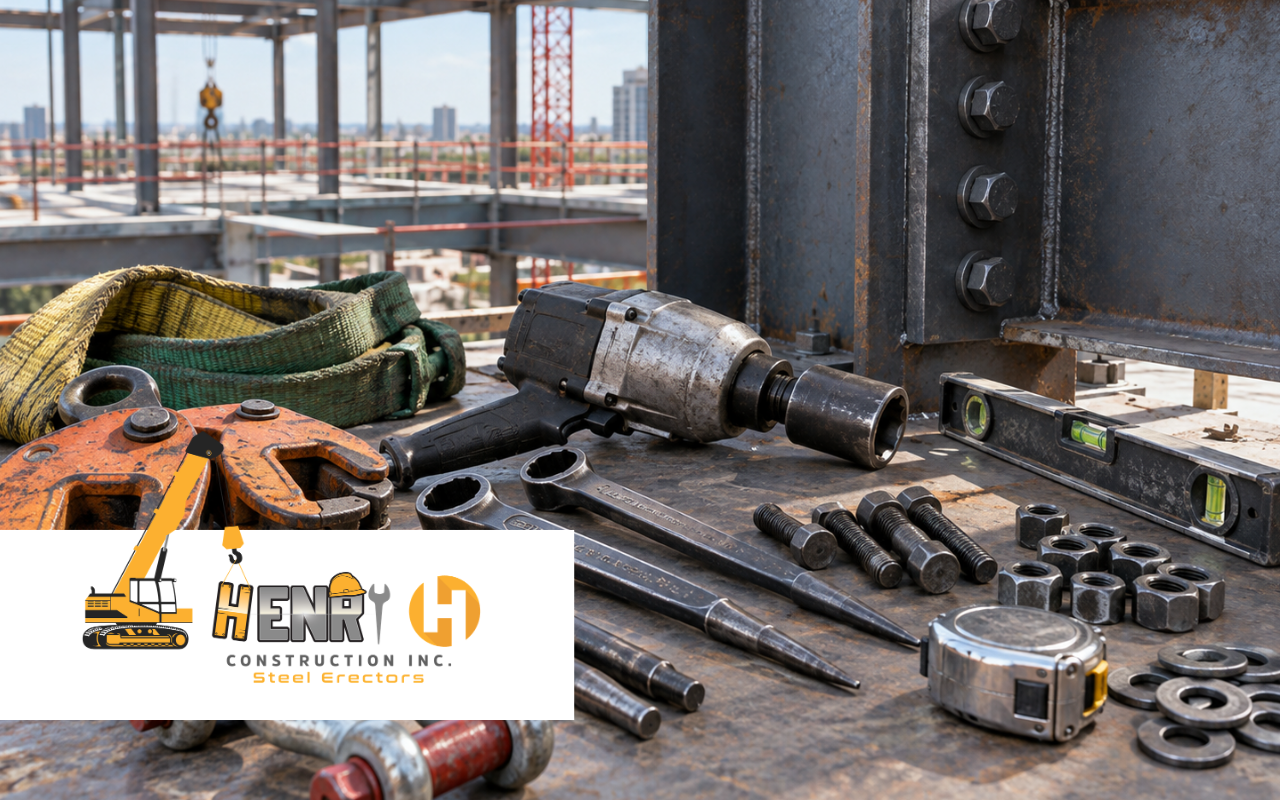
Steel erection tools include hand tools, power tools, measuring devices, lifting gear, and safety equipment. Crews often use several tool types together while setting columns, beams, connections, and decking.
Spud wrenches support alignment, impact wrenches secure bolts, and levels check position. Cranes and rigging systems handle heavier members. Our guide to equipment used for structural steel work explains how larger systems support these tasks.
- Spud wrenches and drift pins line up bolt holes.
- Impact and torque wrenches secure bolted connections.
- Levels and measuring tools support accurate placement.
Layout Equipment Builds Accuracy Before Steel Goes Up
Good steel work starts before the first beam is lifted. Crews use total stations, laser levels, transit levels, and distance meters to confirm elevations, column lines, and anchor bolt locations.
Bolt templates and setting plates help keep anchor bolts in the correct position. When foundation work is included, concrete tools may support a level base. These early checks connect with the main phases of structural steel erection.
Lifting And Rigging Systems Move Heavy Steel Safely
Cranes are a major part of steel erection equipment because they move beams, columns, and heavy members into place. Rigging gear may include wire rope slings, shackles, chokers, and spreader bars chosen for each load.
Before lifting, crews review equipment capacity, attachment points, site space, and load balance. Steel erection tools used at this stage must match the work to avoid unnecessary handling problems.
- Shackles connect rigging parts to lifting points.
- Slings support and control steel during movement.
- Spreader bars help manage load shape and balance.
Fastening And Alignment Tools Keep Steel Connections Controlled
After members reach position, crews begin alignment and fastening. Spud wrenches, drift pins, plumb bobs, and levels allow small adjustments before connections are fully secured. Impact and torque wrenches then complete bolted work.
Torque needs vary by connection type and project requirements, so tool condition and calibration matter. Our team at Henry H Construction Inc follows a planned structural steel erection process to keep lifting, alignment, and connection work coordinated.
Welding Decking And Finishing Work Needs Specialized Equipment
Once the main frame is standing, crews may move into decking, welding, and finishing. Steel erection tools for this stage can include powered fasteners, welding machines, wire feeders, grinders, cutting wheels, and magnetic squares.
Welding equipment must match the approved method and project requirements. Protective gear is also essential. Workers may need helmets, gloves, eye protection, safety footwear, harnesses, and other equipment suited to the task.
- Fastening tools secure metal decking where specified.
- Welding equipment completes approved structural connections.
- Grinders help prepare or clean permitted work areas.
Maintenance And Inspection Protect Tool Performance Over Time
Reliable steel erection tools need regular checks. Crews should inspect impact wrenches, torque tools, rigging gear, welding equipment, and lifting systems for visible damage, wear, leaks, or poor operation before use.
Cleaning and organized storage can reduce damage between shifts. Calibrated tools should follow manufacturer service intervals. Inspection devices, weld gauges, and measuring tools also help teams review completed work.
Frequently Asked Questions
What tools do ironworkers use most often?
Ironworkers commonly use spud wrenches, drift pins, impact wrenches, torque tools, levels, measuring devices, and fall protection gear. Cranes and rigging systems support larger steel members.
Are special tools required for structural welding work?
Yes. Structural welding uses equipment suited to the approved method. This may include welding machines, wire feeders, shielding systems, grinders, helmets, gloves, and other protective gear.
Who usually supplies equipment for steel erection projects?
Steel erector contractors often coordinate the tools and equipment needed for their work. At Henry H Construction Inc, we bring the equipment required for our scope while following plans, site conditions, and safety requirements.
What equipment lifts structural beams and steel columns?
Cranes are commonly used for major lifts. Rigging parts such as slings, shackles, chokers, and spreader bars connect and control loads based on shape, weight, and lifting method.
Which tools help crews align structural steel members?
Crews often use spud wrenches, drift pins, plumb bobs, levels, and measuring devices. These tools help position beams and columns before the final connection is completed.
Experienced Planning Keeps Every Steel Phase Working Together
Successful erection depends on more than owning the right equipment. Crews also need clear sequencing, safe lifting plans, accurate measurements, and equipment that fits the site. Good planning reduces repeated movement and helps each stage connect with the next.
With Henry H Construction Inc, you get coordination backed by field experience. Review our steel erection contractor services in Indianapolis or connect with us to discuss your next step.