
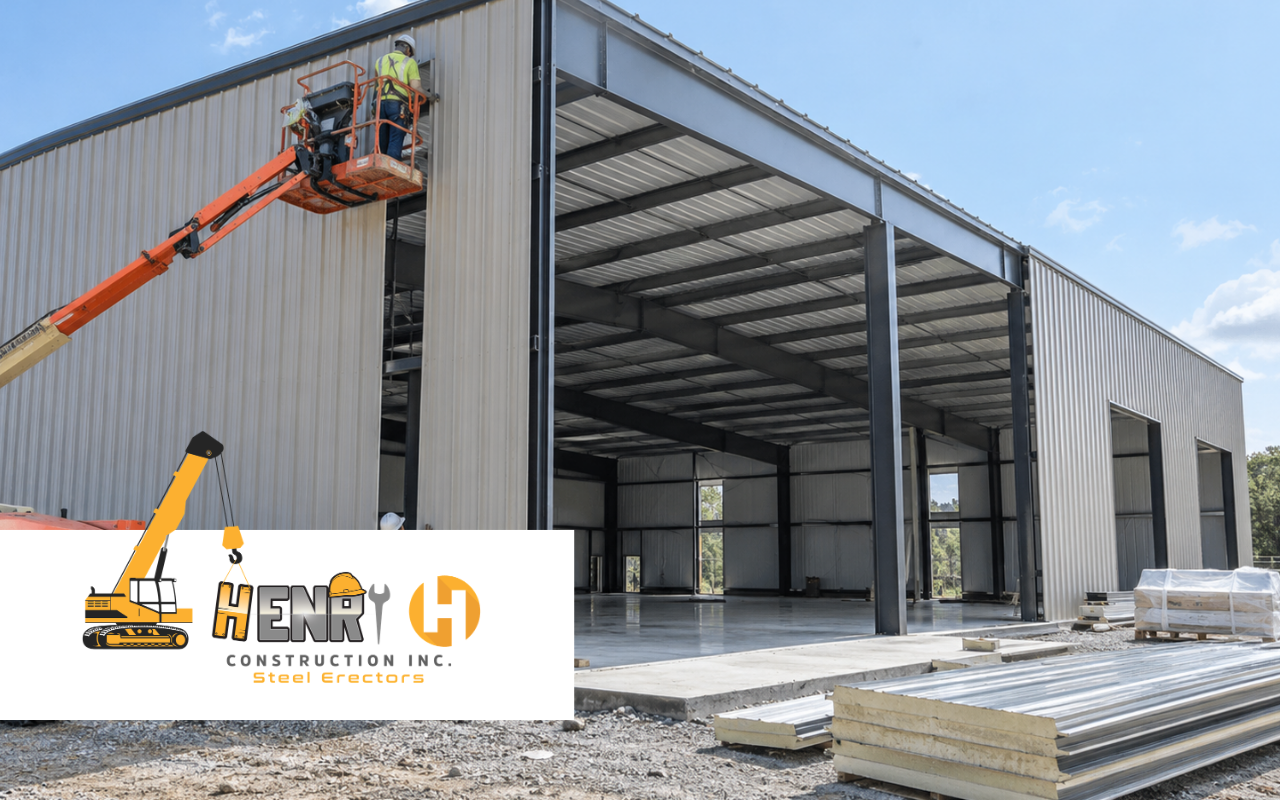
When planning a construction project, understanding steel erection phases makes each stage easier to follow. From foundation checks to final connections, every step supports alignment, steady progress, and a strong finished frame.
At Henry H Construction Inc, we work across Indianapolis and nearby Indiana communities. Our team explains how structural steel erection moves from one stage to the next, making timing, access, and coordination easier to follow.
Planning Foundations Before Structural Steel Erection Work Begins
The steel erection process starts before a crane lifts the first member. Crews review site access, elevations, foundation conditions, and anchor bolt locations. Concrete must be ready for the planned work, while crane paths and staging areas need firm, clear ground.
Accurate anchor bolts are important because columns depend on them for proper placement. Before steel erection begins, teams compare measurements with project drawings and correct issues early.
- Check foundation and anchor bolt locations.
- Confirm crane and truck access routes.
- Prepare clear material staging areas.
Organizing Materials Keeps Structural Steel Work Moving Smoothly
Steel members usually arrive labeled to match project drawings. Crews sort columns, beams, joists, braces, and other pieces so they can be found in the planned order. Good staging reduces extra handling and helps keep active work zones clear.
At Henry H Construction Inc, we coordinate field conditions with the planned sequence so erecting structural steel can move forward with fewer avoidable interruptions.
Building Primary Frames With Columns Beams and Bracing
Primary framing begins with columns, followed by beams and girders that create the main skeleton of the building. Cranes lift each member into position while crews make the required temporary or initial connections.
Temporary bracing supports stability while the frame is incomplete. During steel erection phases, crews may keep these supports in place until enough permanent members and connections are installed.
- Set columns on prepared foundations.
- Place beams and girders between columns.
- Add temporary bracing as the frame develops.
Adding Secondary Steel Decking and Floor Systems Safely
After the main frame is stable, crews add secondary members such as joists, purlins, bridging, and cross bracing. These parts support floors, roofs, walls, and other building systems while helping the structure hold its intended shape.
Decking may follow once the supporting steel is ready. Our steel erection equipment guide explains common tools and machines used during these stages of steel building erection.
Completing Connections Alignment Checks and Final Structural Inspections
Connections may use bolts, welds, or both, depending on the plans. During the steel erection process, crews secure members, check alignment, and complete required connection work as the frame progresses.
Inspections should happen throughout the project, not only at the end. Review may cover bolts, welds, dimensions, placement, and other structural details.
Managing Safety Scheduling and Communication Across Each Phase
Safety and coordination remain important through all steel erection phases. Crews may use fall protection, controlled areas, personal protective equipment, and planned crane procedures based on site conditions.
Planning also helps protect the schedule. Our steel erection timeline resource covers common timing factors, including deliveries, weather, inspections, and crew availability.
- Match deliveries to the planned erection sequence.
- Track inspections and completed work each day.
- Address field changes before they affect later trades.
Throughout these steel erection phases, steady communication helps crews respond to site changes without losing sight of the planned sequence. Daily records, progress photos, and inspection notes can also help project teams confirm completed work and prepare for upcoming activities.
Frequently Asked Questions
How long does the erection work usually take?
Project length depends on building size, design, site access, weather, deliveries, and inspection timing. A smaller frame may move quickly, while a larger or more detailed project can take longer.
Why is temporary bracing needed during construction?
Temporary bracing helps hold members steady while the frame is incomplete. It normally stays in place until the structure has enough permanent support.
What happens after the structural frame is finished?
After structural steel erection and inspections are complete, later trades can begin roofing, exterior systems, floor work, utilities, and interior construction based on the project schedule.
Do local projects usually require permits and inspections?
Requirements depend on the project and local authority. Teams should confirm permits, inspection points, and other rules before work begins.
Who should manage erection work in Indiana?
Experienced contractors should understand drawings, jobsite coordination, lifting needs, and local conditions. Our Indianapolis steel erection contractor services page explains our local approach.
Moving From Final Steel Work Toward Project Completion
Final work includes completing required bolting, welding, detailing, cleanup, and inspections. Miscellaneous items may include stairs, ladders, railings, or supports shown in the plans. Each task helps prepare the structure for the next phase.
At Henry H Construction Inc, you get practical guidance backed by more than 22 years of experience. If your project involves steel erection phases or structural steel erection services in Indiana, connect with us and discuss the next step.