
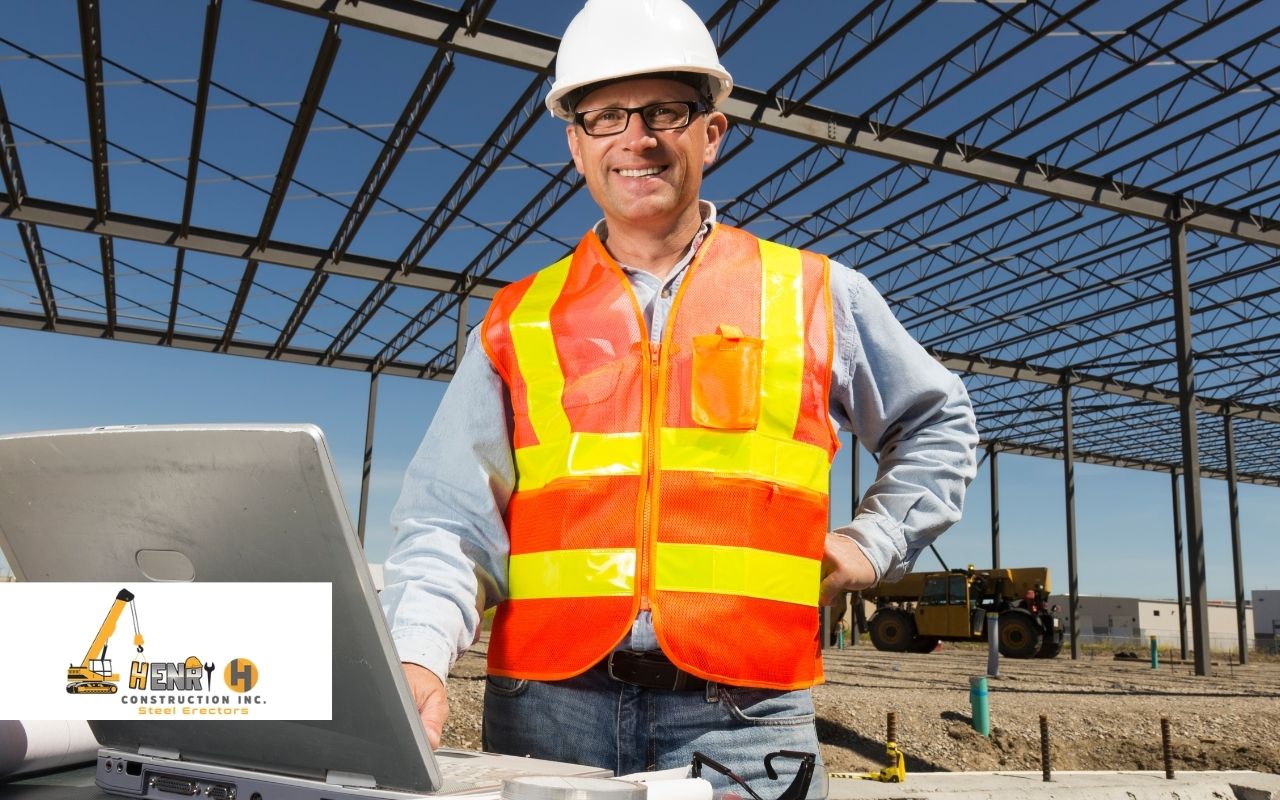
In the bustling world of construction, where time is money and materials often come at a premium, the challenge lies in leveraging innovative strategies that enhance efficiency without compromising on quality. Steel frames, with their strength and durability, are a staple in modern construction projects, but what if there’s a way to build smarter without cutting corners? Enter the realm of value engineering for steel frames—a transformative approach that revolutionizes how we view design and functionality. By focusing on member optimization, splice strategy, and standardized connections, stakeholders can achieve remarkable outcomes that redefine project standards.
Consider the construction landscape in Indianapolis, where projects demand more than just structural integrity, but also cost-effectiveness and sustainability. Here, the art of value engineering becomes a catalyst for progress, offering solutions that streamline processes while ensuring superior performance. Dive into an exploration of how innovative engineering ideas are not only preserving the quality of steel frames but are also pushing the boundaries of what’s possible in modern construction. This journey unlocks a treasure trove of strategies that aren’t merely theoretical but have been proven in dynamic, real-world applications.
Member Optimization Techniques for Steel Frames
Advanced member optimization strategies transform traditional steel framing by analyzing load patterns, member interactions, and section properties to achieve the highest strength-to-weight ratio. By employing structural analysis software, engineers can iterate through thousands of section sizes—ranging from I-beams to hollow structural sections—selecting profiles that satisfy design demands with minimal material. High-strength steel grades also play a key role in reducing overall weight without sacrificing performance.
- Use tapered beams at peak bending moments for efficiency.
- Adopt high-strength materials to minimize section sizes.
- Consolidate load paths to eliminate redundant supports.
This combination of computational design methods and modern materials ensures the steel frame delivers optimal stiffness and durability at a lower cost. In practice, member optimization might involve using tapered beams where bending moments peak at midspan, or selecting larger flange widths only where shear demands are high. Secondary members such as purlins and girts can be optimized by consolidating load paths and minimizing redundant supports. In regions like Indianapolis, where both seismic considerations and tight project budgets exist, member optimization drives significant savings in fabrication, transportation, and erection. The result is a leaner, greener steel frame that meets or exceeds building codes while reinforcing the core goals of value engineering for steel frames.
Splice Strategy Enhancements in Value Engineering
Optimizing splice strategy is essential for expediting on-site assembly and reducing overall labor costs. By carefully locating splices at low-moment or low-shear regions of beams and columns, fabricators can limit shop welding to high-capacity workshops, and reserve site welding for simpler, smaller operations. Bridging these considerations with logistics planning ensures that steel members arrive in sections sized for transportation constraints, yet spliced efficiently once on site.
- Locate splices at low-stress regions for better efficiency.
- Standardize bolted splices to minimize field welding.
- Match-mark components for faster on-site assembly.
A robust splice strategy leverages standard splice plates, bolted connections, and match-marking to eliminate guesswork in the field. Under the umbrella of value engineering for steel frames, this approach balances fabrication complexity, shipping dimensions, and erection speed. The use of prequalified bolted splices also mitigates the need for specialized inspectors at every joint, accelerating inspection timelines and reducing administrative overhead while upholding quality standards.
Standardized Connections: Enhancing Efficiency and Quality
Standardized connections streamline fabrication processes by limiting the variety of bolt patterns, weld details, and plate dimensions. This uniformity allows shops to batch-fabricate connection plates, reducing setup times and minimizing material waste. When fabricators in Indianapolis adopt a limited palette of connection types, economies of scale are realized through bulk procurement of bolts and steel plates.
- Reduce connection variety to increase production speed.
- Train crews on repeatable joint types for better accuracy.
- Procure materials in bulk for greater savings.
From a quality standpoint, repeatable connection designs lead to fewer errors during production. Welders become familiar with each connection detail, reducing rework and enhancing overall consistency. Standardized connections also simplify training for erectors in the field, promoting faster, safer installations. Ultimately, these efficiencies feed directly into cost savings and schedule acceleration, illustrating why standardized connections constitute a cornerstone of value engineering for steel frames.
Case Study: Implementing Value Engineering in Indianapolis Construction Projects
A mid-rise office project in downtown Indianapolis exemplifies how value engineering principles can be embedded from concept to completion. Early in design, structural engineers collaborated with steel fabricators to apply member optimization, selecting high-strength sections that cut steel tonnage by 12% without altering framing layouts. Splice locations were co-developed with the erector to coincide with floor-to-floor height changes, allowing preassembled bundles to be lifted into place efficiently.
Standardized connections simplified both shop detailing and field erection. By limiting connection varieties to three bolted patterns and one weld type, the project reduced fabrication lead time by 15%. The team also engaged local suppliers for just-in-time deliveries, ensuring that steel members arrived when needed, reducing on-site storage and handling. This coordinated approach not only delivered the structure ahead of schedule but also achieved measurable cost savings, showcasing the power of value engineering for steel frames in an urban environment.
Cost-Effectiveness Through Innovative Design Approaches
Innovative design approaches, such as integrating composite steel-concrete decking or optimizing bracing layouts, can dramatically enhance cost-effectiveness. Composite systems leverage the concrete slab as part of the bending-resistant section, reducing steel quantities for beams and girders. Likewise, strategically placed bracing subsystems can stabilize the structure with fewer members by concentrating lateral loads into a designed load path.
Another method utilizes parametric modeling to test design permutations, isolating configurations that minimize material usage while respecting deflection limits and vibration criteria. By converging on the most efficient geometry, projects in regions like Indianapolis capture both budgetary and scheduling advantages. As a result, the building owner benefits from lower direct costs, faster construction, and a structure tailored to its unique performance requirements—in line with the objectives of value engineering for steel frames.
Sustainability Benefits of Value Engineering for Steel Frames
Reducing material consumption through member optimization and efficient splice strategy directly correlates with a lower embodied carbon footprint. High-strength steel grades allow for slimmer sections, translating into reduced embodied energy per square foot of building area. Recycled content in structural steel further amplifies environmental gains, as modern mills can produce sections with 90% or greater scrap content.
Additionally, standardized connections minimize offcuts and scrap plates during fabrication. By adopting value engineering principles, project teams in Indianapolis can quantify total material savings and integrate them into LEED or other green building certification documentation. The synergy between carbon reduction goals and pragmatic engineering solutions demonstrates how sustainability and cost efficiency go hand in hand under the banner of value engineering for steel frames.
Real-World Applications of Value Engineering Strategies
Across educational, commercial, and industrial sectors, value engineering for steel frames has led to streamlined construction workflows and significant cost reductions. Universities have implemented pre-engineered splice kits to erect research towers in record time, while manufacturing facilities have adopted standardized connections to reduce downtime during expansions or reconfigurations. In each case, member optimization ensured that only necessary steel was specified, cutting both waste and expenditure.
One distribution center renovation in Indianapolis used modular sections with match-marked splice plates to reconfigure racking loads rapidly. This not only minimized interruption to daily operations but also maintained rigorous safety standards without excessive field welding. These examples highlight the versatility of value engineering techniques and their proven track record in real-world applications—transcending theory and delivering tangible project improvements.
Maximizing Performance: The Impact of Value Engineering on Project Standards
Value engineering for steel frames elevates project standards by embedding rigorous performance criteria into every step of the design and construction process. Engineers align structural demands with material properties, ensuring deflection limits, vibration tolerances, and long-term durability targets are met without overdesign. This results in leaner structures that outperform conventional systems under service loads and extraordinary events.
Moreover, by prioritizing member optimization, splice strategy, and standardized connections, project teams can reduce coordination errors, accelerate schedules, and maintain high levels of quality control. The cumulative impact is a structure that not only meets code but often surpasses client expectations in terms of cost, timeline, and operational efficiency. To explore more about expert construction solutions, visit the services page.
FAQs About Value Engineering for Steel Frames
What is value engineering for steel frames?
It is a systematic process aimed at improving efficiency, reducing costs, and maintaining or enhancing the performance and quality of steel frame structures.
How does member optimization contribute to better project outcomes?
Member optimization reduces material usage while maintaining strength, leading to lighter, more sustainable, and cost-effective structures.
Can value engineering principles be applied during construction?
Yes, they can be integrated during design and construction phases to refine details, enhance productivity, and ensure superior performance.
Are standardized connections beneficial for all types of projects?
Absolutely. Standardized connections enhance fabrication efficiency, minimize errors, and streamline erection across diverse project types.
Where can I get professional assistance with applying value engineering principles?
To collaborate with experts who specialize in optimizing steel frame projects, reach out through the contact page.
Future Trends in Value Engineering for Steel Frames
The next frontier of value engineering will harness digital twin technologies and machine learning algorithms to predict structural behavior and optimize member layouts in real time. Automated splice design and robotic bolting systems promise to reduce field labor hours and enhance connection precision. In parallel, emerging high-performance steels and hybrid materials will enable even greater member optimization, shaving weight and cost from structural systems.
Regional markets, including Indianapolis, stand to benefit from integrated supply chains and cloud-based collaboration platforms, which synchronize design updates, fabrication schedules, and logistics planning. As these trends mature, value engineering for steel frames will become more data-driven, agile, and sustainable—reshaping how we define efficiency and quality in structural engineering.
Elevating Construction Standards Through Strategic Engineering
Value engineering for steel frames offers a holistic pathway to reduce costs, streamline construction, and support sustainability goals without sacrificing structural integrity. Through member optimization, splice strategy enhancements, and standardized connections, project teams can unlock efficiencies at every stage—from design concept to final erection.
By embracing these strategic engineering ideas, stakeholders in Indianapolis and beyond can deliver buildings that exceed performance benchmarks while adhering to tight budgets and timelines. The future of steel framing lies in marrying advanced analysis tools with practical design innovations—ensuring that quality remains paramount as we build smarter for generations to come.