A structural steel galvanizing guide helps project teams choose corrosion protection for commercial steel. In Indianapolis, changing weather, moisture, and temperature swings can affect exposed metal. Therefore, the right finish can support longer service life, lower maintenance, and reliable performance.
At Henry H Construction Inc, we help clients compare protection options before fabrication and erection. This supports better decisions for beams, columns, frames, and other steel parts exposed outdoors.
Why Galvanizing Protects Structural Steel for Many Years
Galvanizing covers steel with a bonded zinc layer that protects the surface from moisture and rust. Zinc can also protect small exposed areas if the finish is scratched. As a result, galvanized steel can stay dependable with fewer repairs.
- Strong protection against moisture and outdoor exposure
- Less need for repeated coating repairs
- Good coverage around edges, corners, and complex shapes
For coordinated steel work, our commercial construction and steel services can support planning from fabrication through installation.
Hot-Dip Galvanizing Creates Durable Bonded Zinc Protection
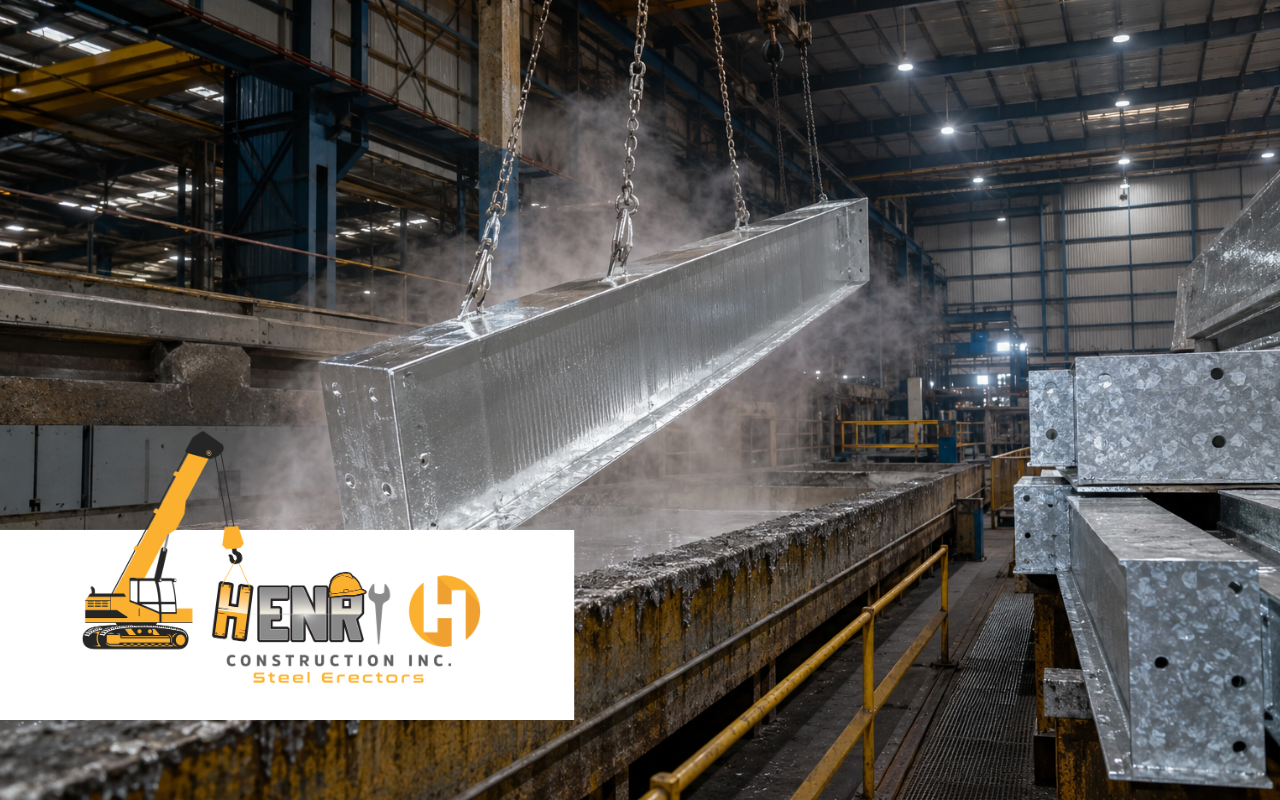
Hot-dip galvanizing begins by cleaning steel so oil, rust scale, and residue do not block the coating. The steel is prepared and placed in molten zinc. The zinc reacts with the steel and forms bonded layers that become part of the surface.
When comparing hot-dip galvanizing vs paint for structural steel, galvanizing often gives more complete coverage on difficult shapes. A structural steel galvanizing guide also explains why preparation, venting, drainage, and fabrication details matter before dipping.
Outdoor Service Life Depends on Exposure Conditions
Many owners ask how long does galvanized structural steel last outdoors. The answer depends on coating thickness, moisture, air quality, road salt, industrial exposure, and design. In moderate inland conditions, galvanized steel can often protect structural parts for several decades before major coating renewal is needed.
- Dry, clean locations usually support slower zinc wear
- Salt and constant moisture can shorten coating life
- Good drainage reduces standing water on steel surfaces
Our team at Henry H Construction Inc considers these conditions when discussing steel erection durability and long-term performance for commercial projects.
Paint and Galvanizing Differ in Long-Term Maintenance
Paint can work well when appearance, color, or site conditions call for a coating system. However, paint may need cleaning, touch-ups, and future recoating. Galvanizing usually needs less routine attention because zinc protects the steel without relying only on a surface film.
For this reason, hot-dip galvanizing vs paint for structural steel should be reviewed with maintenance access in mind. A structural steel galvanizing guide helps owners consider access equipment, labor, shutdowns, and future repairs instead of only the first application.
Galvanized and Weathering Steel Suit Different Projects
The choice between galvanized vs weathering steel for commercial buildings depends on design goals and site conditions. Weathering steel develops a stable rust-like surface with the right wet and dry cycles. However, poor drainage or constant moisture can reduce that protection.
- Galvanized steel offers a zinc barrier across the surface
- Weathering steel depends on proper exposure and drainage
- Appearance may influence the final material choice
When clients contact our team, we review project needs with practical details in mind. Our structural steel work in Indianapolis supports corrosion protection planning.
Fabrication Details Shape Galvanized Steel Performance Outdoors
Good results start before steel reaches the galvanizing facility. Vent and drainage holes, weld quality, steel thickness, and part size can affect coating coverage. Therefore, structural steel fabrication with corrosion protection in Indianapolis, IN should consider fabrication needs and the selected protection system early.
A structural steel galvanizing guide connects design choices with future performance. Simple details, such as avoiding pockets that hold water, can reduce corrosion risk and make the structure easier to inspect.
Frequently Asked Questions
Does galvanized steel still need regular inspections?
Yes. Visual inspections help identify damage, trapped debris, chemical buildup, or areas where the coating has been affected. Regular checks can support longer service life.
Can scratched galvanized steel still resist corrosion?
Small scratches may remain protected because nearby zinc can help protect exposed steel. Larger damaged areas may need an approved zinc-rich repair coating.
Is galvanized steel suitable for Indianapolis weather?
Yes, it can perform well through changing seasons when the structure has good drainage and the coating suits the expected exposure.
What affects galvanized coating life the most?
Moisture, salt, pollutants, coating thickness, and surface design affect zinc wear. Poor drainage can also increase corrosion risk over time.
Should corrosion protection be planned before fabrication?
Yes. Early planning helps address venting, drainage, welds, dimensions, and handling needs before fabrication is complete.
Plan Corrosion Protection Before Structural Steel Installation
Choosing corrosion protection early can improve coordination, reduce future maintenance, and support a durable structure. With a clear structural steel galvanizing guide, project teams can compare galvanizing, paint, and weathering steel based on exposure, design, access, and long-term needs.
At Henry H Construction Inc, we work with clients needing practical structural steel fabrication with corrosion protection in Indianapolis, IN. For help reviewing your project, get in touch with us about your steel project.