Every project depends on clear measurements, careful checks, and steel that fits as planned. Therefore, steel fabrication tolerances explained in simple terms can help teams avoid delays before beams reach the job site.
At Henry H Construction Inc, we believe early planning supports safer erection and smoother work. When limits for camber, holes, and materials are clear, crews can reduce rework and keep the schedule moving.
Accurate Steel Measurements Support Safer Construction Projects
Fabrication tolerances are the small allowed differences between the planned size and the final steel piece. These limits help beams, plates, and connections line up during installation without force or unsafe changes.
Also, steel fabrication tolerances explained clearly can show why small changes matter. A beam that is too long, a hole that is off, or a bent plate can slow the whole project.
Shop Accuracy Creates Better Fit During Field Installation
Shop accuracy means each part is cut, drilled, and welded close to the approved drawings. However, no shop can make every piece perfect, so a tolerance guide sets the safe range for small differences.
As a result, the field crew can work faster because parts arrive ready for assembly. For more service details, visit our steel fabrication service details.
Common Tolerance Types Used In Daily Steel Work
Different tolerance types control different parts of the work. With steel fabrication tolerances explained in practical terms, each type supports safer handling, better alignment, and cleaner installation fit.
- Dimensional limits control length, width, thickness, and shape.
- Position limits guide holes, slots, plates, and connection points.
- Straightness limits help reduce bends, twists, and poor alignment.
Steel Standards Keep Project Teams Properly Aligned
Steel fabrication standards give designers, shops, inspectors, and installers a shared way to judge acceptable work. Therefore, decisions become clearer when small changes appear during cutting, welding, or final review.
- They reduce confusion between drawings, shop work, and field needs.
- They support fair checks before steel leaves the shop.
- They help protect quality across each stage of the project.
At Henry H Construction Inc, we use clear expectations so the full team can make better choices before problems reach the site.
Planning Factors That Change Required Tolerance Levels
Not every project needs the same level of control. Long beams, thick plates, tight spaces, exposed steel, and special designs can all change how exact the work must be.
For example, exposed steel may need closer checks because people will see the final finish. Meanwhile, hidden framing may allow more variation if strength, safety, and installation fit are still protected.
Quality Checks Reduce Rework, Delays, And Safety Risks
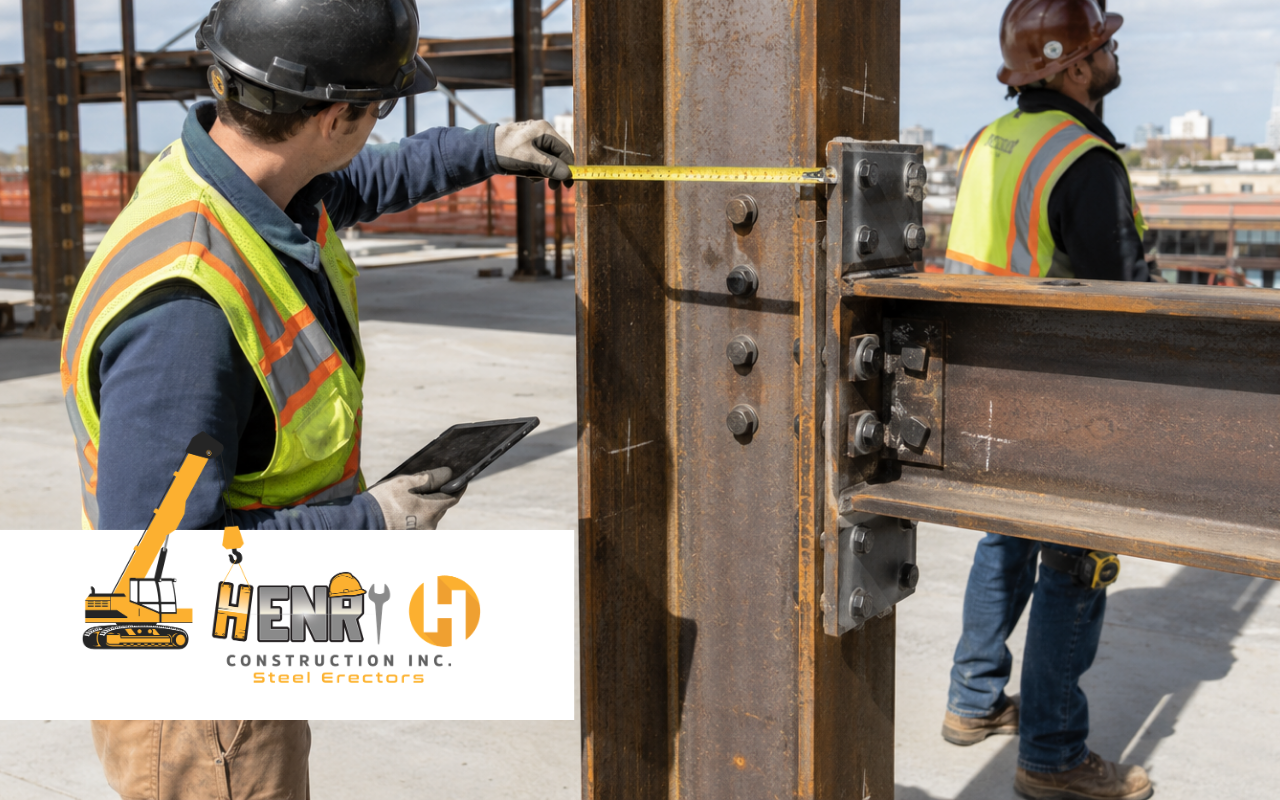
Good checks catch small problems before they become costly field issues. Basic measuring tools, digital equipment, trial fitting, and final inspections can all support better fabrication tolerances.
Also, steel fabrication tolerances explained during review helps the crew understand what must be fixed before delivery. For deeper planning, our structural steel quality checklist can guide key control points.
Frequently Asked Questions
What are fabrication tolerances in steel work?
Fabrication tolerances are the allowed size, shape, or position changes in a steel part. They help teams know when a piece is acceptable or needs correction.
Why does shop accuracy matter so much?
Shop accuracy matters because poor cuts, holes, or welds can create delays on-site. Better shop work usually means faster installation and fewer field changes.
Can tight tolerances increase project costs?
Yes, tight tolerances can add shop time and inspection work. However, they may also reduce delays, rework, and labor needs during installation.
How do standards support a better installation fit?
Standards give everyone the same quality rules. Therefore, the fabricator, contractor, and installer can work from shared expectations before steel reaches the field.
When should tolerances be reviewed during planning?
Tolerances should be reviewed before production begins. Early review helps balance safety, cost, schedule, and the real needs of the project.
Build Faster With Clear Tolerance Planning Steps
When steel fabrication tolerances explained are part of early planning, projects become easier to manage. Teams can reduce surprises, protect safety, and support a cleaner installation fit from start to finish.
- Review drawings before steel moves into production.
- Confirm hole placement, camber, and connection needs early.
- Check material records before fabrication begins.
With Henry H Construction Inc, you get practical guidance before work moves forward. To discuss your next project, visit our contact page for project guidance.