
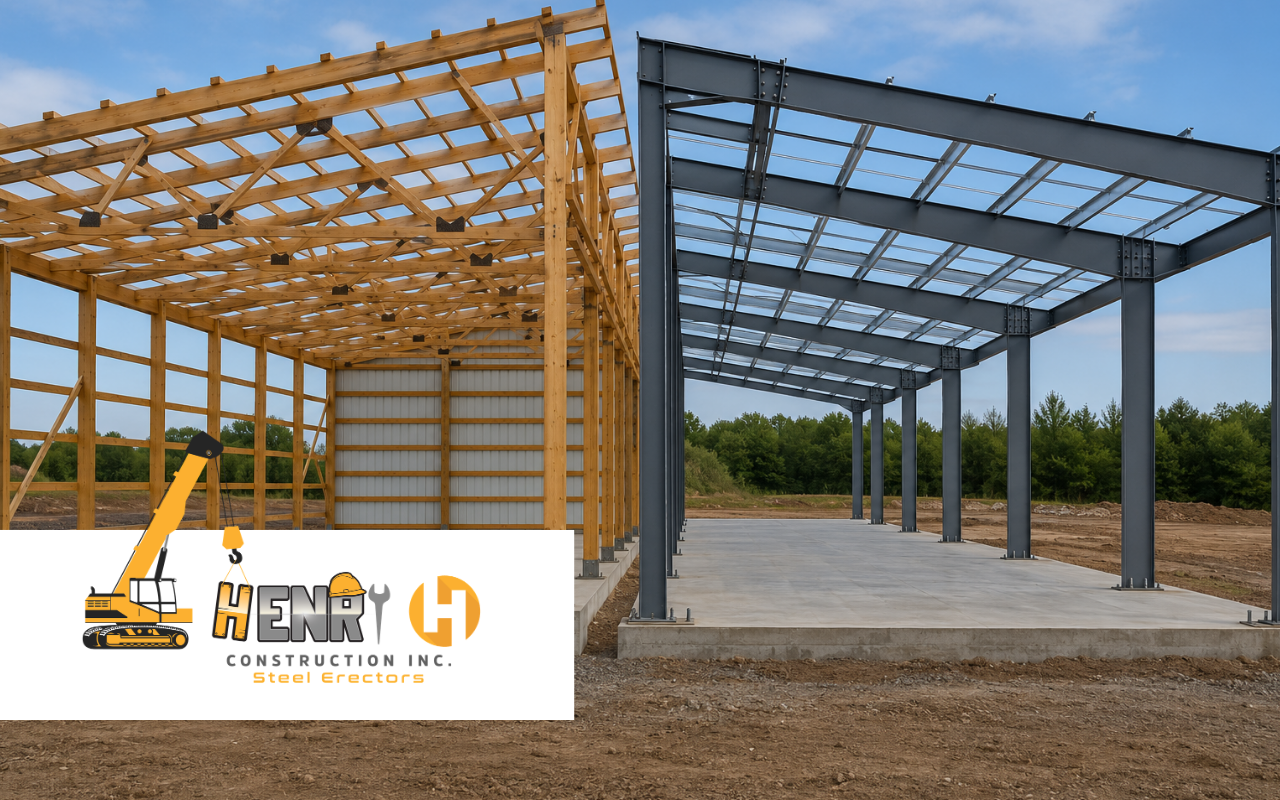
Choosing between a post-frame vs structural steel building affects strength, flexibility, upkeep, and future growth. Both systems can work well, but the right choice depends on building use, site needs, and long-term plans.
At Henry H Construction Inc, we help owners compare practical building options before construction starts. In Indiana, weather, building use, and expansion plans can all shape the final decision. Clear planning helps us match the structure to daily work and future needs.
Key Differences Between Post-Frame and Structural Steel Systems
A post-frame structure uses large wood posts and roof trusses to carry the main loads. A structural steel frame uses steel columns and beams. This basic difference affects clear spans, wall design, load capacity, and how easily the building can support heavy commercial activity.
For a closer look at related systems, review our comparison of pre-engineered metal and structural steel buildings. It can help clarify where each steel-based option fits.
Cost Factors That Shape Your Overall Building Decision
A pole barn vs structural steel building cost comparison should look beyond the first construction stage. Post-frame buildings often use simpler foundations and fewer heavy structural parts. That can suit farms, storage buildings, and smaller facilities with basic needs.
Structural steel may require more planning and stronger foundations, yet it can support larger spaces and heavier loads. Over time, maintenance, expansion, repairs, and business use may matter just as much.
- Foundation and site needs
- Building size and clear-span goals
- Future expansion plans
Strength and Durability for Demanding Commercial Building Projects
The structural advantages of steel over post-frame for commercial use become clear in larger or more demanding projects. Steel can carry heavy roof loads, equipment, wide openings, and long spans with reliable performance. It also avoids problems linked to wood rot and insect damage.
When customers ask when is structural steel better than post-frame construction, we often look at building size, use, and expected load. For warehouses, industrial spaces, or facilities with heavy equipment, steel can provide a stronger long-term fit.
Construction Speed, Site Work, and Efficient Project Planning
Post-frame construction can move quickly because crews set posts, install trusses, and close in the structure with a simple framing process. This works well for owners who need a useful building without complex interior structural demands.
A post-frame vs structural steel building may take a different path on site because steel frames often need engineered foundations, lifting equipment, and careful connection work. Our steel erection and concrete construction guide explains how major construction methods affect project planning.
Design Flexibility and Future Expansion Options for Owners
Post-frame buildings offer open interiors and flexible wall layouts for barns, workshops, and simple commercial spaces. Doors, windows, and interior areas can often be adjusted without making the design overly complex.
Structural steel is also highly adaptable, especially when future growth matters. Frames can support wider bays, taller spaces, mezzanines, large doors, and planned additions. At Henry H Construction Inc, we consider how the building may need to change as the owner’s operations grow.
- Wide open work areas
- Taller interior clearances
- Planned building additions
- Support for future equipment
Maintenance, Weather, and Long-Term Performance Across Building Types
Wood posts need regular checks for moisture, decay, pests, and damaged finishes. Good drainage and proper protection can reduce these risks, but owners should still plan for ongoing inspections throughout the life of the building.
Steel also needs care, mainly around coatings, drainage, fasteners, and exposed areas. Still, it does not rot or attract insects. In a post-frame vs structural steel building comparison, that difference can make steel easier to manage for long-term commercial use.
- Inspect drainage and roof areas
- Check coatings and exposed surfaces
- Watch wood areas for moisture
Frequently Asked Questions
Which building type works better for farms?
Post-frame construction often fits barns, equipment storage, and similar farm uses because it is simple, flexible, and practical. The final choice still depends on span, loads, and long-term use.
When is steel better for commercial projects?
Steel often makes more sense when the building needs wide spans, heavy load support, tall clearances, or future expansion.
Does steel require less maintenance over time?
Steel avoids rot and insect damage, but coatings, drainage, and connections still need routine checks.
Can both systems meet Indiana building codes?
Yes. Both can be designed to meet local rules when the structure, loads, site, and use are properly reviewed.
Who can help compare these construction options?
Our team can review the project goals, site needs, and intended use before recommending a practical path.
Choose a Building System That Supports Future Growth
The best post-frame vs structural steel building choice depends on use, size, loads, maintenance goals, and future plans. A post-frame vs structural steel building should support both current operations and the way the property may change over time.
With Henry H Construction Inc, you can review your options with a structural steel building contractor in Indiana who understands local conditions and commercial needs. See our construction and steel building services, or contact our team about your project to discuss the next step.