
Explore the thrilling journey behind Plainfield’s newest marvel, the Logistics Hub. This is not just a tale of steel and construction, but a clear story of planning. In this guide, you will see how Plainfield logistics hub steel erection phasing moves like a puzzle, with phased bays and truck courts working together.
Moreover, the work runs day and night through night shifts, while safety corridors keep crews protected. As each phase comes alive, innovation, teamwork, and timing turn a big idea into a working logistics center.
Planning the Plainfield logistics hub steel erection phasing
When engineers and project managers aligned each step of Plainfield logistics hub steel erection phasing, they focused on flow first. They mapped the site and marked where truck courts and phased bays would sit. Early surveys also flagged soil and drainage risks, so the schedule stayed steady once heavy equipment arrived.
In addition, teams coordinated steel and tool deliveries and created staging zones near the truck courts. They also set clear safety corridors, so workers could move with less risk. If you want local support for complex schedules, Henry H Construction Inc brings field-proven planning habits to jobs like these.
- Site mapping that reduces rework
- Delivery sequencing for smoother crane time
- Marked safety corridors for safer movement
- Staging plans that limit on-site congestion
Foundation phase: setting a strong base
After clearing the site, crews built a stable base that matched the phased bays. They dug trenches for footings and utilities, then set concrete forms and placed rebar grids. As a result, the foundation gained strength and resisted settling over time.
Next, the team monitored curing times and verified levels, lines, and dimensions. This step mattered because clean foundation tolerances make steel work faster later. For crews that specialize in local erection needs, see the Plainfield steel erection team at Henry H Construction Inc.
- Footings and utility alignment with bay layout
- Rebar placement for long-term stability
- Curing control to protect schedule quality
- Inspection checks before steel starts
Steel frame phase: lifting the skeleton into place
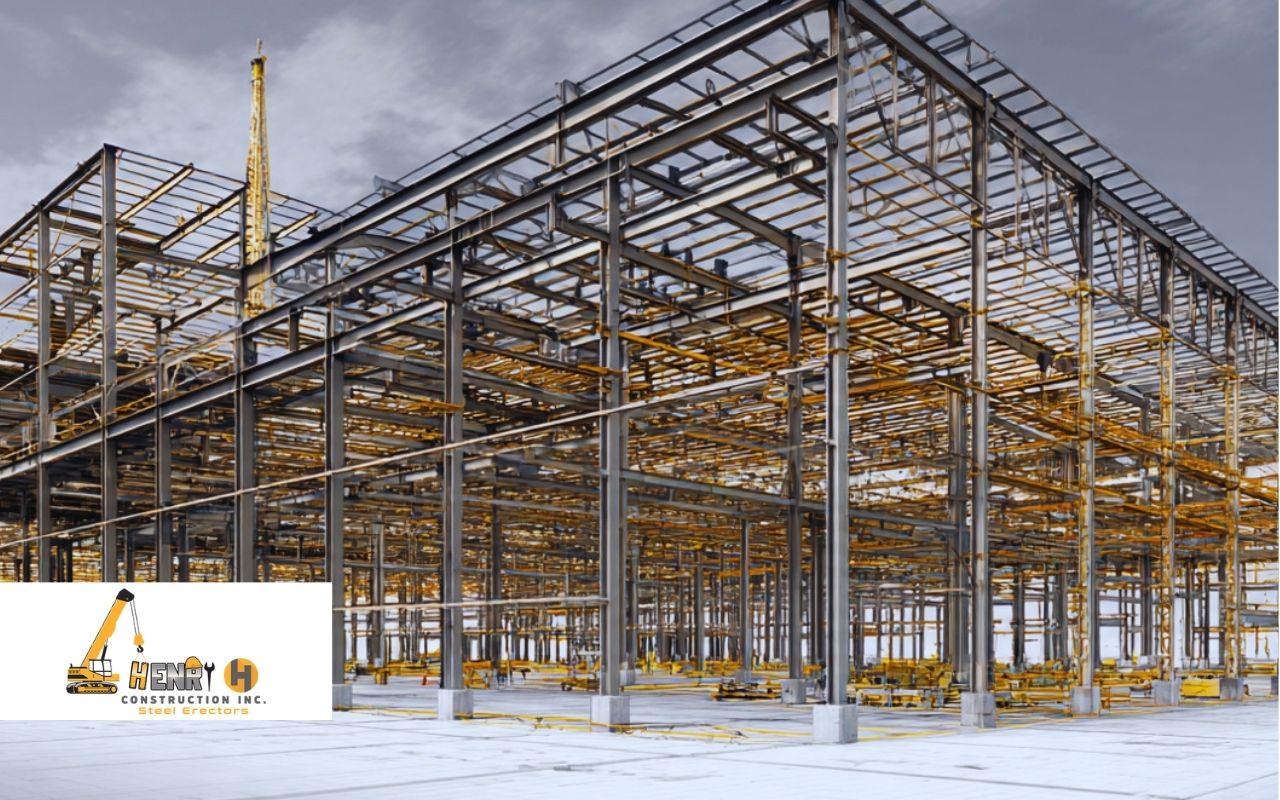
During this stage, the skyline changed fast as columns and beams rose in sequence. Cranes worked near truck courts, lifting sections into position while spotters guided every pick. Meanwhile, crews bolted key joints to lock the frame into the planned grid.
To keep momentum, steel arrived in the order crews needed it. Therefore, cranes spent less time waiting and more time setting. Bolting teams followed torque checklists, and inspectors confirmed welds and connections met standards. In many projects, Henry H Construction Inc supports this pace by coordinating crews, lifts, and access routes with care.
Installing key components across phased bays
Once the frame stood, teams added floors, roof panels, and utilities. Mechanical crews ran ductwork and piping through the steel grid, while electricians pulled wiring for lighting and controls. Importantly, systems were routed to protect access and reduce future disruptions.
After that, workers installed metal decking and poured floors. Roof panels went up quickly with pre-tested sections, and loading bay components tied phased bays to the truck courts. If you want examples of similar build coordination, explore the project portfolio from Henry H Construction Inc.
Night shifts that keep progress moving
Night work helped protect the timeline without overloading daytime teams. Under strong lighting, crews welded and fastened connections while nearby roads stayed quieter. As a result, deliveries reached truck courts with fewer delays, and critical tasks stayed on track.
Also, supervisors shared clear handoffs between shifts through daily reports. Safety officers made extra rounds to confirm lighting, access, and equipment met standards. With the right leadership, Henry H Construction Inc can help teams blend day and night operations without losing quality or control.
- Quieter roads that support smoother deliveries
- Shift handoffs that reduce missed tasks
- Extra safety checks for low-light work
- Steady output that protects deadlines
Safety corridors and jobsite controls
Safety corridors guided workers away from cranes and suspended loads at every stage. Barriers and signs marked high-risk zones, while spotters managed foot traffic. Because night shifts add visibility challenges, crews relied on high-visibility gear and tight lighting checks.
In addition, toolbox talks reinforced fall protection near elevated areas. Fire exits and first-aid stations stayed clearly marked, and emergency drills helped crews stay ready. This approach supports an accident-resistant culture that matters as schedules speed up.
Coordinating teams for smoother integration
Large sites require many trades, so coordination kept work flowing. Project managers held weekly meetings to share schedules and flag clashes early. When steel crews needed space, other teams paused and then returned once frames were locked in.
Digital tracking helped, too. Teams shared photos and status updates in one place, so decisions happened faster. In turn, fewer emails and fewer surprises kept the job moving in a controlled way.
Modern techniques that speed up installation
Modular components pre-cut off-site reduced field adjustments and boosted accuracy in phased bays. High-performance concrete also supported faster curing, so crews could advance sooner. Meanwhile, drones and digital plans helped spot alignment issues early and kept updates current.
These tools reduced waste and improved timing. More importantly, they made it easier to keep safety corridors clear and to protect the schedule during heavy lift windows.
Frequently Asked Questions
What does Plainfield logistics hub steel erection phasing mean?
It is a step-by-step approach to building the steel structure in planned stages. Each stage supports safer workflow, better access, and clearer scheduling.
How do truck courts affect phasing decisions?
Truck courts influence traffic flow, crane access, and material staging. Therefore, teams often phase work to keep routes open and reduce conflicts.
Why use phased bays instead of building everything at once?
Phased bays help teams finish and hand over sections sooner. They also reduce congestion and make inspections and quality checks easier to manage.
How do safety corridors improve jobsite performance?
Safety corridors separate people from moving equipment and heavy lifts. As a result, crews move more predictably and reduce collision and fall risks.
What is the biggest advantage of night shifts on these projects?
Night shifts can reduce delivery delays and keep key work moving when roads are quieter. However, they require stronger lighting and added safety checks.
Final touches that bring the hub to life
With steel, concrete, and utilities in place, teams added wall panels, insulation, and paint. Inside, crews installed lighting and equipment systems that support daily operations. Outside, they paved truck courts and marked bays for reliable docking.
Finally, signage and inspections confirmed code compliance and safe movement through the site. In the end, Plainfield logistics hub steel erection phasing helped the project move from vision to reality with structure, discipline, and smart sequencing. To discuss a similar plan for your site, connect with Henry H Construction Inc through the contact page.