
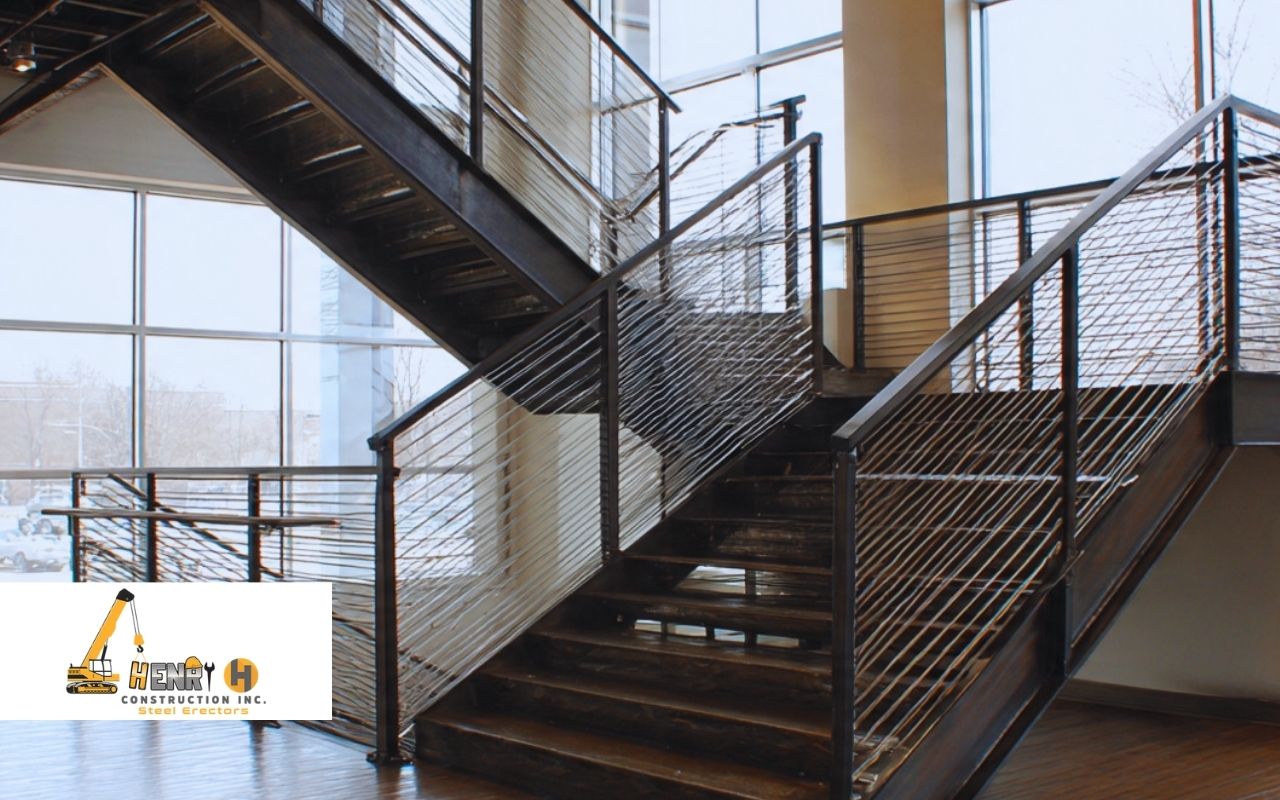
Miscellaneous Metalwork Stairs & Rails in Indianapolis Specs help your team design safe, clear, and buildable stair details. First, set a strong base for your Indianapolis project with simple, consistent notes that avoid confusion. Use plain language so fabricators, installers, and inspectors understand the same intent from the very beginning.
Then describe safe dimensions, durable materials, and finishes that handle freeze–thaw cycles and winter salt. Clearly note locations, loads, and connections so there are no surprises onsite. List acceptable nosing types, handrail returns, and finish options to prevent last-minute substitutions. Decide early when to shop weld for quality and when to bolt in the field for access and speed.
Additionally, call out tolerances, anchors, and substrates so holes line up and stairs feel solid. Close your section with a short checklist and submittal needs. With a clean outline, your team can price, build, and inspect with confidence from the first sketch to the final walk-through. When needed, partner with a trusted miscellaneous metalwork contractor in Indianapolis to align design and field conditions.
Project scope and definitions
Start by explaining what Miscellaneous Metalwork Stairs & Rails in Indianapolis Specs cover on your job. State if the scope includes main exit stairs, exit access stairs, service stairs, or rooftop stairs. Clearly explain whether platforms, ladders, or guards belong in the same package. This simple map keeps bids aligned and avoids missing pieces.
- Identify interior versus exterior work for every stair and rail run.
- List design loads for treads, stringers, handrails, and guards.
- Point out related trades like concrete, masonry, drywall, waterproofing, and flooring.
- Include shop drawings, samples, mockups, and field measurements in the scope.
Moreover, define key terms in simple language so everyone talks the same way: tread, riser, nosing, handrail, guard, and infill. Explain how these parts connect to nearby walls, slabs, and landings. When the scope is this clear, you reduce change orders and help your construction services team work together smoothly.
Code basics and typical dimensions
Next, state the governing codes and rules that apply to your stairs and rails. Use typical sizes that pass plan review in Marion County and surrounding Indianapolis areas. Give a clear rise and run that meet code, with consistent risers from bottom to top. Set stair widths based on occupancy, and include landings large enough for users to rest and turn.
- Call out guard height and opening limits where a four-inch sphere cannot pass.
- Set handrail height, shape, and clearance from walls for a safe grip.
- Show handrail extensions at top and bottom where required.
- Note how rail ends connect back safely into walls, floors, or posts.
Also include tactile warnings if any part of the project requires them. Keep tolerances tight so finished stairs feel even, quiet, and comfortable underfoot. These simple, code-based notes save review time and support safer Miscellaneous Metalwork Stairs & Rails in Indianapolis Specs.
Materials and thickness choices
Select materials that match use, budget, and weather. For most Indianapolis work, mild steel performs well and allows easy welding and bolting. Use thicker stringers and landing frames for longer spans, and choose tread plates or grating deep enough to resist bounce. For exterior stairs, consider galvanized steel for strong rust control in snow and winter salt.
- Use heavier zinc coats or duplex systems in high-salt or high-traffic areas.
- Choose steel with tight mill scale and smooth edges for painted interiors.
- Use stainless steel in wet or health-care spaces with a defined finish level.
- Pick aluminum when weight matters, and isolate it from concrete and steel.
Furthermore, list minimum gauges, bar sizes, and angles so fabricators do not undersize parts. Confirm grain direction and sheen for exposed metals. When your material notes are clear, Miscellaneous Metalwork Stairs & Rails in Indianapolis Specs stay consistent from design through fabrication.
Treads, risers, and stair nosings
Describe tread styles that fit both use and cleaning needs. Solid plate treads feel firm and quiet, which suits many interiors. Bar or diamond grating drains water and sheds snow, which helps exterior stairs during Indianapolis winters. Set riser types carefully: open risers feel light but must meet code, while closed risers hide views and improve child safety.
Then describe stair nose details in simple, direct terms instead of vague notes. For example, request abrasive metal noses for slip resistance, plus rubber or vinyl noses for interior comfort. Use contrasting edges for visibility at school or public entries. Show the projection and radius so feet land safely without catching edges, and require secure fastening with continuous support.
Handrails, returns, and graspability
Write handrail rules that protect every stair user. Set a height range measured to the top of the gripping surface, and keep that height consistent along flights and landings. Choose a simple round or oval shape that fits the hand and avoids sharp corners. Keep clear space between the rail and nearby walls so fingers never pinch against finishes.
- Describe rail ends that turn into walls, floors, or posts to prevent snags.
- Show how far extensions continue past the top riser and bottom nosing.
- Note bracket spacing and anchoring so rails feel firm, not loose.
- Consider a lower secondary rail when many children use the stairs.
Also require smooth joints and aligned splices, and protect finishes during installation to avoid scratches. Clear language on handrails supports better graspability in all Miscellaneous Metalwork Stairs & Rails in Indianapolis Specs.
Guardrails and safe infill patterns
Explain where guards are required and how high they must be to prevent falls. For infill, pick patterns that stop a four-inch sphere from passing at most locations, and limit climbable features in areas used by children. Options include vertical pickets, steel mesh, perforated panels, or glass topped with sturdy rails.
Pickets should be straight, evenly spaced, and welded or bolted to resist sway. Mesh or panels need tight frames and tamper-proof fasteners. For windy rooftops or open atriums, consider stiffer rails and closer posts to reduce vibration and noise. Show base plates or post sleeves sized for the edge condition, and specify cap rails aligned with the handrail profile where they run together.
Finish options for durability and look
Match finish options to location, weather, and cleaning plans. For exterior steel in Indianapolis, hot-dip galvanizing offers strong rust protection against snow, salt, and freeze–thaw cycles. For added color, choose a powder coat over a zinc-rich primer or over galvanizing, following a careful wash and cure process. This layered system improves long-term performance.
- Use high-quality shop primer plus field paint for many interior stairs.
- Control touch-ups carefully to avoid color shifts and uneven sheen.
- Define stainless finishes clearly, such as brushed or satin levels.
- Use anodizing or durable powder coat for exposed aluminum parts.
Additionally, call out sheen, color, and texture, and require samples so the team agrees before production. Good finish notes reduce chipping, peeling, and early rust. They also keep stairs and rails looking clean for years within Miscellaneous Metalwork Stairs & Rails in Indianapolis Specs.
Connections: shop-weld vs field-bolt
Decide early when parts should be welded in the shop and when pieces should be bolted together onsite. Shop welding usually offers better quality, faster production, and a cleaner appearance because parts stay flat, dry, and easy to support. It also keeps sparks and fumes out of finished spaces, which protects nearby construction.
However, bolted field joints help when access is tight or long parts must pass through small doors. They also help when exact fit is uncertain until other trades finish. Use slotted holes and shims at field joints for fine adjustment without cutting. Show weld types in the shop and bolt sizes in the field, and list coatings for any exposed hardware.
Anchors, substrates, and vibration control
Detail anchors that match each substrate. Use expansion anchors or epoxy anchors for concrete, lag screws or structural screws for wood, and through-bolts or weld tabs for steel. Show edge distances and embed depths so holes do not spall or split. For slab edges or stair pockets, provide templates so steel lands in the right place every time.
Then add isolation pads where rails meet hard floors to reduce ringing and protect finishes. If the stair feels bouncy, increase stringer depth, add mid-span supports, or stiffen landings with angles or plates. Use consistent base plates and washers so loads spread evenly. Seal exterior anchor holes against water and salt, and separate dissimilar metals to reduce corrosion.
Tolerances, fabrication, and quality checks
Set simple tolerances that fabricators can hold and inspectors can verify. Keep riser height differences small from bottom to top, and keep tread depths equal. Align pickets and panels in straight lines, and avoid twist in stringers and posts. Require shop drawings with clear dimensions, weld symbols, finishes, and connection details for all Miscellaneous Metalwork Stairs & Rails in Indianapolis Specs.
Request mill certificates and coating data when they are important to the project. Use mockups to lock in stair nose shapes, rail end details, and coating choices before full production starts. During delivery, protect edges and corners. During installation, avoid grinding near finished surfaces. Finally, close with a punch list that checks alignment, wobble, fastener tightness, and touch-up paint.
Frequently Asked Questions
How detailed should my stair and rail spec be?
Your spec should clearly state materials, finishes, loads, dimensions, and connection methods. Additionally, include drawings, samples, and mockups. When details are this clear, fabricators can price accurately and installers can work faster with fewer RFIs.
How do I choose stair materials for Indianapolis weather?
For exterior stairs, use galvanized or duplex-coated steel that resists snow, salt, and freeze–thaw cycles. For interiors, choose painted steel, stainless steel, or aluminum based on moisture level, cleaning methods, and desired appearance throughout the building.
When should I prefer welded connections instead of bolted ones?
Use shop welding when you want smoother looks, tighter quality control, and fewer onsite sparks. Select bolted joints when access is tight, parts are long, or final alignment depends on work by other trades, such as concrete or framing.
What helps reduce stair vibration and noise?
Increase stringer depth, add intermediate supports, and stiffen landings with angles or plates. Also use isolation pads at base plates to reduce ringing on hard floors. Consistent anchor details and solid substrates help stairs feel firm and stable.
When should I bring in a miscellaneous metalwork contractor?
Engage a specialty contractor during early design or schematic stages. They can review concepts, suggest efficient details, and confirm that code, budget, and field conditions align. Early input often prevents redesigns and speeds final approval of your stair and rail package.
Coordination, submittals, and closeout
Organize submittals so review moves quickly. Request product data, shop drawings, finish samples, and a simple schedule that matches other trades. Coordinate closely with concrete for embeds, with drywall for wall backing, and with flooring for stair nose transitions. Share dimensions with MEP teams so rails clear devices, sprinklers, and pipes.
Plan delivery routes and storage so long stringers can enter the site without damage. During closeout, gather maintenance guides for finishes, cleaning instructions for noses and rails, and a list of touch-up materials. Provide coating warranties when they are available. Finally, schedule a short training session so the facility team understands how to care for the stairs and rails, and invite them to contact the Henry H Construction team whenever new Miscellaneous Metalwork Stairs & Rails in Indianapolis Specs are needed.