
Our metal building energy efficiency guide explains simple ways to reduce energy loss, improve comfort, and plan a stronger commercial metal building. Metal moves heat quickly, so insulation, air sealing, smart design, and regular care all matter.
At Henry H Construction Inc, we guide clients through practical choices without making the process confusing. Our goal is to help each building perform well, meet local needs, and support long-term use from design through construction.
How Metal Buildings Lose Energy Through Heat Transfer
Metal walls and roofs can move heat fast. During summer, heat can enter quickly. During winter, indoor heat can escape just as fast. Our metal building energy efficiency guide focuses on slowing that movement so indoor temperatures remain more stable.
Several details affect performance, including insulation thickness, roof color, window placement, building direction, and air sealing. Small design changes can reduce heating and cooling demand while creating a more comfortable space for employees, equipment, and daily operations.
Energy Codes Shape Better Commercial Building Performance Standards
Energy code requirements for commercial steel frame buildings affect insulation, windows, lighting, airflow, and other design details. IECC compliance for commercial metal buildings also helps confirm that a project follows recognized energy standards.
- Review insulation values before construction begins.
- Plan air sealing around joints and openings.
- Check lighting and window performance during design.
- Prepare documents for required local inspections.
At Henry H Construction Inc, we coordinate these details early when they apply to the project. You can also review our commercial construction services to see how planning connects with the full building process.
Insulation Choices Improve Comfort Inside Metal Building Spaces
Good insulation helps control indoor temperature and lowers demand on heating and cooling systems. It can also reduce noise and support better moisture control when the complete wall or roof system is installed correctly.
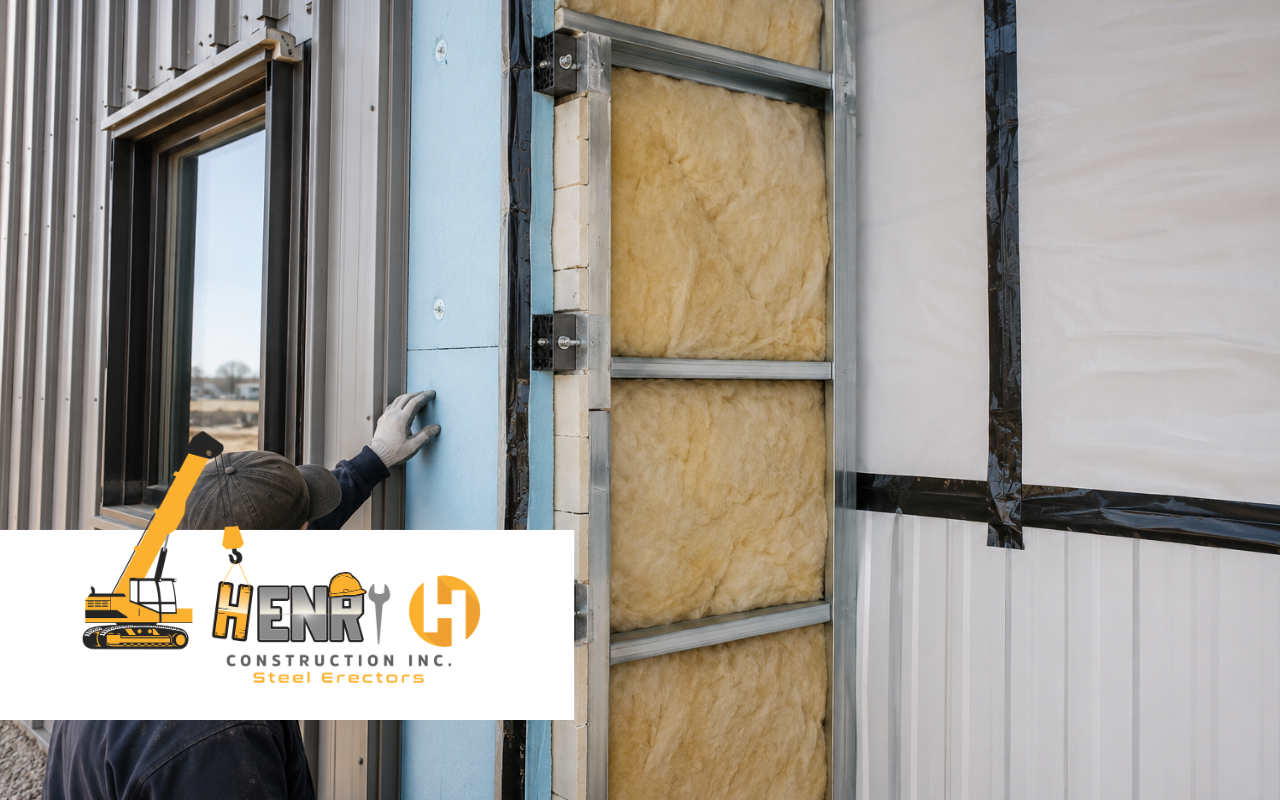
Thermal bridging in metal wall panels can weaken insulation because metal parts create direct paths for heat. Continuous insulation, spray foam, and carefully fitted systems can reduce those weak points. Our metal building insulation options explain common choices in more detail.
Practical Ways Reduce Thermal Bridging Across Metal Assemblies
Thermal bridging in metal wall panels often happens where framing, fasteners, or other metal parts connect interior and exterior surfaces. Reducing these paths helps the wall system work better and supports more stable indoor temperatures.
- Use continuous insulation across framing where appropriate.
- Add thermal breaks between key metal connections.
- Seal panel edges, joints, and openings carefully.
- Check gaskets and sealants during installation.
These steps can also support IECC compliance for commercial metal buildings when included in the approved design. A complete approach is often more effective than depending on cavity insulation alone.
Sustainable Design Features Support Lower Long-Term Energy Use
Sustainable design can improve building performance while supporting wider business goals. Reflective roofs, daylighting, solar-ready layouts, recycled steel, and lower-emission materials can all play a role depending on the building and site.
Our metal building energy efficiency guide also encourages owners to think beyond one system. Roof design, water use, windows, and material choices can work together. Early decisions are easier to coordinate with the structure, budget, and planned building use.
Efficient HVAC And Daylighting Lower Daily Building Demand
Heating, cooling, and lighting can create significant daily energy demand. Right-sized HVAC equipment, separate temperature zones, smart controls, and regular filter changes can reduce waste while keeping occupied spaces comfortable.
- Use controls that match real occupancy schedules.
- Place skylights or high windows with care.
- Add shading where direct sun causes overheating.
- Keep vents, coils, and filters clean.
Natural light and ventilation may also reduce demand in suitable spaces. As an energy-efficient metal building contractor in Indiana, we consider local conditions, building use, and system layout when developing an efficient project plan.
Frequently Asked Questions
What makes metal buildings lose energy quickly?
Metal conducts heat easily, so poorly insulated walls, roofs, joints, and openings can create fast heat transfer. Good insulation and air sealing help reduce those losses.
How does continuous insulation improve building performance?
Continuous insulation covers more of the framing and reduces direct heat paths. As a result, it can improve indoor comfort and lower heating or cooling demand.
Why does IECC compliance matter for metal buildings?
IECC compliance for commercial metal buildings helps confirm that key energy requirements have been considered. However, local rules and adopted code versions may vary by location.
Can structural planning affect energy efficiency too?
Yes. Framing layout, panel connections, openings, and roof design can influence insulation and sealing. Our structural steel capabilities show how careful coordination can begin with the building frame.
When should energy efficiency planning begin?
Energy planning should begin during early design. This timing makes it easier to coordinate insulation, HVAC, windows, roof systems, and code needs before construction begins.
Build Long-Term Efficiency Into Every Metal Building Project
Energy efficiency works best when design, materials, installation, and maintenance support each other. Our metal building energy efficiency guide connects these areas so owners can make clearer decisions instead of treating energy performance as an afterthought.
With Henry H Construction Inc, we connect practical construction planning with energy goals for commercial projects. Follow this metal building energy efficiency guide as a starting point, then visit our project contact page to discuss your upcoming building.