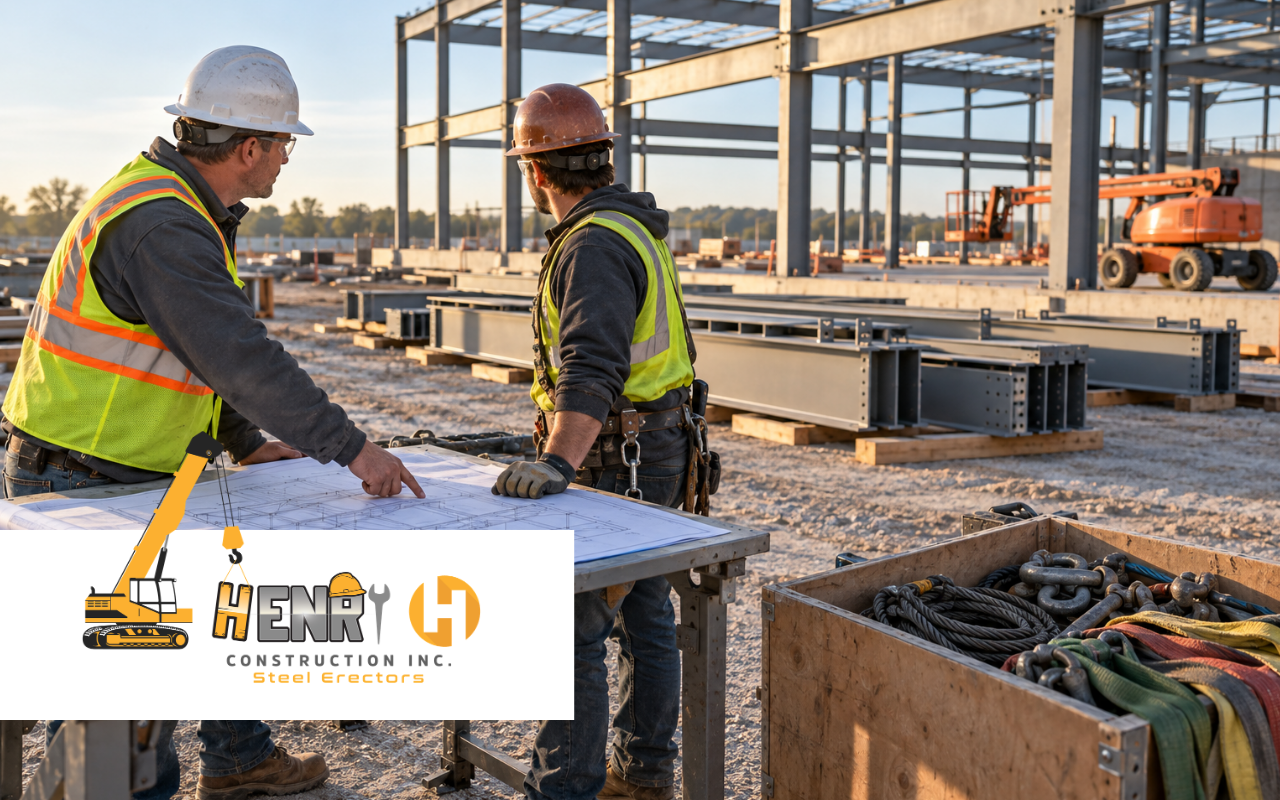
Steel erection workforce planning gives our projects a clear path from the first lift to final connections. At Henry H Construction Inc, we plan labor around project size, site needs, crew skills, and daily work so each phase moves with purpose.
Good planning also reduces idle time, rushed decisions, and uneven workloads. With the right people on the right tasks, we support safer work and steadier progress.
Strong Workforce Planning Keeps Steel Projects Moving Smoothly
Every steel project depends on timing. Our steel erection workforce planning process starts by matching crew size and skill levels with each stage of the work. This helps us prepare for deliveries, crane activity, bolting, and other key steps without adding unnecessary labor.
Clear assignments also support stronger teamwork. Our guide to steel erection team roles explains how defined responsibilities help crews stay organized from the ground up.
Project Conditions Shape Every Steel Crew Scheduling Decision
Steel erection crew planning should reflect real project conditions. Site access, building size, steel sequence, equipment, weather, and delivery timing can change how many workers are needed.
- Review the project scope and erection sequence.
- Match crew size with planned daily tasks.
- Account for weather and site access limits.
- Plan around material and crane availability.
For Henry H Construction Inc, careful planning means looking ahead. This helps us avoid last-minute changes that can slow progress or pressure the crew.
Balanced Crew Skills Support Safer Daily Production Goals
A strong crew needs the right mix of experience. We consider who can handle rigging, signaling, connecting, bolting, equipment support, and supervision before setting assignments.
Cross-training can make ironworker workforce scheduling more flexible. When workers understand several tasks, we can adjust more easily as project needs change. Our steel erection safety training guidance shows why training remains part of dependable workforce preparation.
Flexible Scheduling Helps Crews Handle Unexpected Project Changes
Steel erection workforce planning must leave room for change. Weather, late deliveries, crane issues, or design updates can affect the day’s sequence. A flexible schedule helps us move labor where it is most useful without losing focus on safety or quality.
- Keep backup tasks ready for weather delays.
- Use staggered shifts when project timing requires them.
- Move trained workers between compatible tasks when needed.
- Share schedule changes clearly with supervisors and crews.
At Henry H Construction Inc, we use clear communication to keep adjustments practical. Workers need to know what changed, why it changed, and what is expected next.
Clear Coordination Connects Labor With Other Jobsite Teams
Steel crews do not work alone. Our schedule must connect with general contractors, crane operators, delivery teams, and other trades. Good coordination helps prevent crowded work areas and crews waiting for other tasks to finish.
That is why steel erection crew planning works best when it supports the full project schedule. Our resource on subcontractor coordination in Indianapolis explains how communication between teams can help keep work moving in the right order.
Safety Training Strengthens Workforce Planning From The Start
A schedule is only useful when it supports safe work. Before assigning workers, we review training, experience, and the needs of each task. This helps supervisors place qualified workers where their skills fit best.
- Confirm training before assigning high-risk work.
- Review fall protection and rigging expectations.
- Hold clear daily safety talks before work starts.
- Track changing site conditions throughout each shift.
Strong ironworker workforce scheduling also helps reduce fatigue. Reasonable shifts, planned breaks, and balanced workloads support better focus around heavy steel and active equipment.
Frequently Asked Questions
How early should workforce planning begin for steel erection?
Planning should begin before field work starts. Early review gives us time to match labor, equipment, delivery timing, and crew skills with the project sequence.
Why is crew size important during steel erection?
Crew size affects workflow, communication, and task coverage. Too few workers can slow progress, while too many can create crowding or unnecessary downtime.
How does scheduling support safer steel erection work?
Good scheduling helps prevent rushed work and excessive fatigue. It also gives supervisors time to place trained workers on tasks that match their experience.
Can workforce plans change after a project begins?
Yes. Workforce plans should adjust when weather, deliveries, equipment, or project sequencing changes. Flexibility helps crews stay productive without forcing unsafe shortcuts.
What makes local workforce planning more effective?
Local planning considers labor availability, site conditions, subcontractor timing, and project expectations. These details are especially useful when choosing a steel erection contractor in Indianapolis.
Better Planning Builds More Reliable Steel Project Results
Consistent steel erection workforce planning helps turn complex work into a clearer daily process. Our steel erection workforce planning also keeps labor decisions tied to real field needs. By combining crew skills, flexible schedules, safety needs, and trade coordination, we can support steady production from the first steel delivery through final connections.
At Henry H Construction Inc, our team keeps planning connected to field conditions and project goals. For more details about our approach, visit our Indianapolis steel erection services or connect with us.