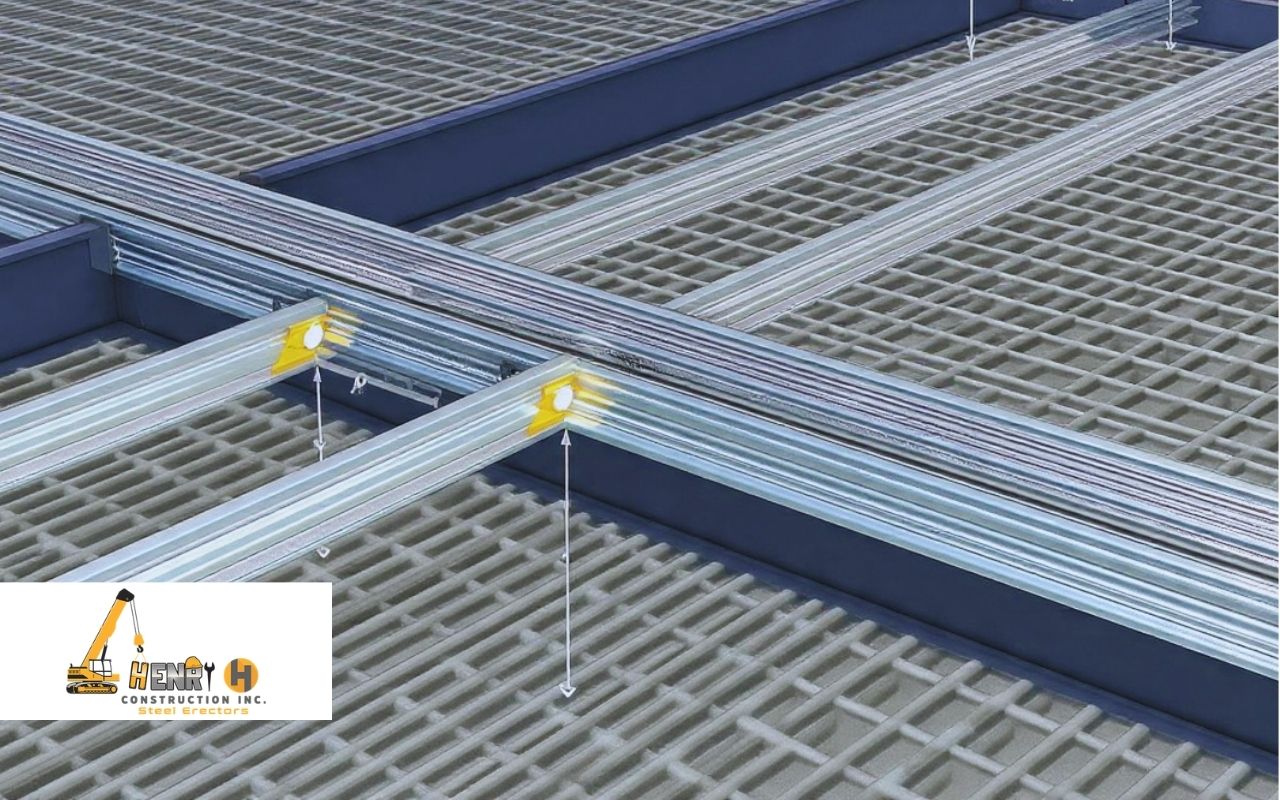
Consider the elements of a building under construction. It’s an intricate dance between beams and joists. Each part helps keep the structure safe. However, a small coordination mistake can create big problems.
That’s why Indianapolis steel joist & deck coordination tips matter. When items like openings, RTUs, pour stops, shoring, or camber are mishandled, costs rise fast. With the right approach, you can avoid common issues and deliver smoother, safer builds.
Why Steel Joist and Deck Coordination Matters in Construction
Steel joist and deck alignment helps the building carry weight the right way. When parts don’t match, loads can shift. As a result, floors may bend more than planned and safety risks can increase.
Therefore, coordination should start early. Teams should work closely across trades. This includes mechanical, electrical, and plumbing crews. In addition, detailed shop drawings and field checks reduce surprises and keep work moving.
Key Parts of Indianapolis Steel Joist & Deck Coordination Tips
Successful Indianapolis steel joist & deck coordination tips begin in design. Engineers pick joist locations and deck layouts. They also confirm spans and load needs. Then, early decisions about openings and mechanical supports reduce jobsite changes.
Moreover, pre-build meetings keep fabricators and field crews aligned. Clear sequencing, staging, and access planning also prevent clashes. As a result, deck panels land correctly and joists sit where they should.
- Review the latest drawings before fabrication and install.
- Hold a coordination meeting with all trades before steel arrives.
- Confirm install order, staging areas, and lifting paths.
- Check key dimensions on-site before cutting or drilling.
Openings: Plan Early to Prevent Jobsite Rework
Openings for stairs, shafts, and building systems must be clear on drawings. When openings are defined early, fabricators can adjust joist lengths and deck panels. Consequently, the structure stays strong and the crew avoids last-minute fixes.
Also, field teams need the same opening plan. When everyone knows the exact locations, edge details and added support can be installed correctly. This helps you apply Indianapolis steel joist & deck coordination tips with fewer delays.
- Mark opening locations on approved drawings and models.
- Coordinate edge support details before deck placement.
- Confirm opening sizes with field measurements.
- Plan reinforcement needs before cutting deck panels.
RTUs: Align Roof Units with Joists and Loads
RTUs often need curbs, support angles, and vibration pads. So, planning these details early helps avoid conflicts with joists. In addition, clear lifting and setting steps help crews place units accurately.
Collaboration between the structural engineer and mechanical contractor is key. When curb supports align with joist centers, loads stay within limits. As a result, the roof system performs as intended and roof damage is less likely.
Pour Stops: Keep Concrete Where It Belongs
Pour stops along deck edges help contain concrete during slab pours. Without them, concrete can spill and create safety issues. Therefore, accurate placement improves edge quality and reduces cleanup.
When pour stop locations match deck seams and support points, crews work faster. Also, good shop drawings reduce guessing. This is another place where Indianapolis steel joist & deck coordination tips protect the schedule.
Shoring: Support the Deck Until the Slab Gains Strength
Shoring provides temporary support until concrete reaches the planned strength. This helps keep deck surfaces level and limits unwanted movement. In turn, joist connections experience less stress during the pour and curing period.
Planning shoring locations and removal order matters. Clearly marked support points also improve safety. For guidance on how a skilled structural steel team supports complex builds, visit structural steel company in Indianapolis.
- Follow maker guidelines for shoring spacing and limits.
- Mark shoring points so crews place supports consistently.
- Coordinate removal timing with concrete strength checks.
- Keep shoring clear of access routes and lift paths.
Camber: Account for Joist Curve Before Deck Goes Down
Camber is the built-in upward curve in many steel joists. It helps offset bending after loads are applied. However, if crews ignore camber, the finished surface may look uneven.
So, verify camber direction and size before install. Compare field conditions to shop drawings. When camber is planned, slabs finish smoother and fewer fixes are needed. This is a core part of Indianapolis steel joist & deck coordination tips.
Best Practices for Seamless Coordination
Regular coordination meetings keep everyone aligned. These meetings help teams handle openings, RTUs, pour stops, shoring, and camber details. Additionally, 3D models and clash checks can reveal problems early.
Pair digital reviews with on-site checks for best results. If you want to see how coordinated planning fits into a full project scope, explore construction services offered by Henry H Construction Inc.
- Use 3D models to spot clashes before steel is ordered.
- Confirm field measurements before final layout is locked.
- Document decisions and share updates with all trades.
- Walk the site with foremen before deck installation.
Frequently Asked Questions
What causes the most delays in joist and deck coordination?
Most delays come from unclear drawings or late changes. Also, missed field checks can lead to cuts and rework.
How should openings be handled in the layout?
Openings should be shown early on drawings and models. Then, edge support details should be reviewed before deck placement.
Why do RTUs require special coordination?
RTUs add concentrated loads and need curb supports. Therefore, they must align with joists and planned load paths.
When is shoring needed for steel joist and deck work?
Shoring is used to support the deck during pours and curing. It stays until the slab reaches the required strength.
How can camber affect the finished slab?
If camber is ignored, the surface can look wavy. However, checking camber early helps produce flatter finishes.
Wrap-Up: Turn Coordination into Stronger Builds
When you manage openings, RTUs, pour stops, shoring, and camber with care, the whole build runs smoother. Clear plans, steady communication, and field checks reduce costly surprises. Most importantly, Indianapolis steel joist & deck coordination tips help you deliver safer structures with better finishes.
If you’re planning a project and want help coordinating steel and deck details, reach Henry H Construction Inc through the contact page.