
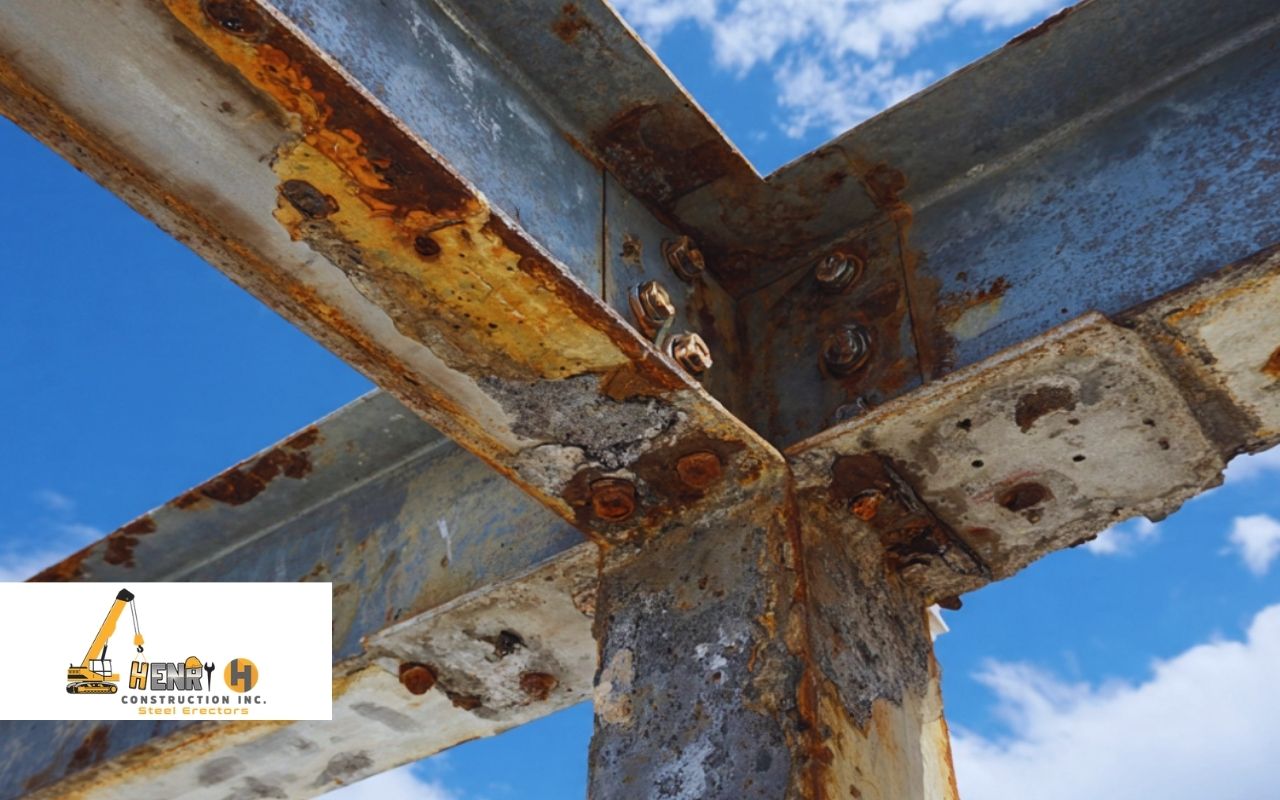
Structural Steel Repair vs Replacement in Indianapolis becomes clearer when you weigh a few key local factors. Weather, freeze-thaw cycles, and road salts can speed corrosion, yet many frames still have a long service life. Owners often wonder if a focused repair is enough or if full replacement is safer.
However, the right answer depends on corrosion thresholds, section loss, cost bands, and acceptable downtime. With clear inspection data, you can choose a path that protects safety, budget, and schedules. This guide uses simple language and practical steps so facility teams, contractors, and owners can move forward with confidence alongside an experienced structural steel company in Indianapolis.
Local climate pressures on steel in Indianapolis
Indianapolis has humid summers, snowy winters, and frequent freeze-thaw cycles that push water into small gaps. In addition, de-icing salts from nearby parking areas or loading docks can spray or move onto columns and beams. These conditions raise corrosion risk on connections, base plates, and spots where paint has failed or peeled.
- Check steel near doors, loading ramps, and roof edges after winter storms.
- Look for spalling concrete around embedded plates and brown or white staining.
- Note areas where snow piles up or meltwater drains across steel details.
Before choosing repair or replacement, review exposure zones around openings and edges. A small repair can work if moisture sources are controlled. However, replacement may be wiser where salts are constant and drying is poor. By matching fixes to climate patterns, you avoid repeating work each season.
Understanding corrosion thresholds before deciding
Corrosion thresholds describe the point where rust depth and spread begin to affect safety. Light surface rust that brushes off usually needs only cleaning and a new coating. However, pitting and heavy scale that reduce thickness demand closer review, especially at connections and load paths. These areas carry more risk.
Once corrosion approaches levels that reduce capacity or damage bolt holes, replacement or reinforcement rises on the list. Clear thresholds help teams compare Structural Steel Repair vs Replacement in Indianapolis without guesswork or scope creep. Use simple rating scales across the site, noting location, spread, and depth. Combine visual checks with easy tools like pit gauges and ultrasonic readings.
Moreover, when readings cluster near your agreed threshold, plan stronger repairs or member swaps. Clear thresholds also streamline bids and schedules, shortening debate and limiting delays on urgent projects. They turn a vague concern into a clear, shared decision point for everyone involved.
Measuring section loss and structural capacity
Section loss is the real test of whether steel can keep doing its job. Start by mapping members with the worst rust or coating failure. Then measure remaining thickness at several points and compare those numbers with original shapes to estimate capacity loss. Even small losses matter at connections where loads concentrate.
If section loss is minor and localized, plates, angles, or welded patches may restore capacity. However, if loss spreads along the length or reaches key details, replacement becomes the safer route. A measured view of section loss turns Structural Steel Repair vs Replacement in Indianapolis into a clear, defensible plan that design teams can explain.
Keep measurements, photos, and sketches together so everyone reads the same story. When loads have grown since construction, test old assumptions instead of copying past repairs. This careful approach ensures that capacity matches today’s use, not yesterday’s design goals.
Estimating cost bands without exact pricing
Cost bands help you choose a path without chasing exact figures that will later shift. Place options into low, medium, and high bands that reflect labor hours, access needs, and material volume. Repairs often sit in lower bands when access is simple and damage is limited to a few members or connections.
- Low band: small, local repairs with easy access and minimal coatings work.
- Medium band: broader repairs, short shoring runs, or several affected bays.
- High band: major replacement, cranes, complex shoring, or custom fabrication.
Include allowances for coatings, fire protection touch-ups, and cleanup. Group tasks by work area to reduce repeat mobilization. A simple banded view clarifies trade-offs, such as a moderate repair today versus a higher band replacement that reduces future interventions. When stakeholders see bands tied to scope, decisions move faster.
Balancing downtime with operational needs
For many facilities, downtime costs decide how Structural Steel Repair vs Replacement in Indianapolis should move forward. Repairs can often be staged during nights or weekends, which keeps most areas open. Replacement may require longer shutdowns for shoring, demolition, and installation, especially around major structural lines or key equipment.
Map work to your busiest periods, then shift activity to quieter windows. Short, planned outages usually beat one long unplanned closure. For sensitive spaces, consider temporary supports that allow safe, partial use. Build a simple communication plan so occupants know where they can move and when. When repeat closures hurt productivity, a one-time replacement may pay back in stable, calm operations.
Coordinating with codes and permitting in Indianapolis
Local codes focus on safety, load paths, fire resistance, and proper detailing. Repairs must restore capacity and meet current code intent, not only past standards. Replacement may trigger extra checks, including continuity, connections, and fireproofing. Therefore, before choosing, meet with your design professional to outline the likely permit path in Indianapolis.
Gather drawings, inspection notes, and photos that show existing conditions. Clear narratives shorten reviews and reduce revisions. When your scope touches exits or rated assemblies, expect more scrutiny and plan time accordingly. You can also review your partner’s approach to planning and safety on the About Henry H Construction page to better understand their process.
Planning material sourcing and lead times
Material timelines can sway your final decision. Common wide-flange sizes and plates are often available quickly, which favors repair plates, angles, or short member swaps. However, custom shapes, long lengths, or matching historic profiles may take longer, pushing you toward repair strategies that use more standard materials already in stock.
Coatings also matter. Surface-tolerant systems might allow faster return to service than full blast-and-coat cycles. Sequence deliveries to match access windows and crane time. Store steel off the ground, covered, and ventilated to avoid new rust before installation. When lead times align with your work windows, projects flow smoothly and avoid unplanned downtime.
Managing safety and risk during the work
Safety planning starts during assessment. Loose scale, weakened connections, and hidden cavities raise risks during cutting, grinding, or welding. Set exclusion zones under overhead work and secure any areas with falling hazards. Fire watch is vital wherever welding happens near coatings, dust, or stored materials that could ignite.
For replacements, plan stable shoring, clear load paths, and step-by-step lifts. Repairs need clean, bright surfaces so inspectors can see welds and bolts. Keep communication simple with daily huddles, clear signs, and quick updates when conditions change. When unknowns appear, such as concealed corrosion behind fireproofing, pause, document, and adjust scope together to protect people and schedule.
Planning life-cycle performance after the fix
The best choice should age well over many years. After repairs, schedule re-inspections at set intervals tied to earlier findings and exposure. Touch up coatings and seal joints before winter. For replacements, choose details that shed water and salts. Also plan coatings with realistic maintenance paths, including safe access for future crews.
Moreover, track leaks, roof edge issues, and splash zones that might restart corrosion. Keep records of section loss readings and dates so trends stay clear. When corrosion thresholds are reached earlier than expected, act before capacity is touched. For site-specific advice, use the contact form for structural steel projects before you finalize your repair or replacement strategy.
Frequently Asked Questions
How often should structural steel be inspected in an Indianapolis facility?
Most busy facilities benefit from a basic visual inspection every year and a more detailed review every few years. However, high-exposure zones near salts or water should be checked more often, especially after winter. Regular inspections catch early rust and coating damage before larger structural issues develop.
What signs suggest steel repair may still be a good option?
Repair is often suitable when rust is mainly on the surface, section loss is small and localized, and access is simple. If original capacity is mostly intact and loads have not increased, targeted repairs with proper coatings can give many additional safe years of service at a reasonable disruption level.
When does full steel replacement become the safer choice?
Full replacement becomes safer when section loss is widespread, key connections are heavily damaged, or loads have grown significantly. Frequent unplanned shutdowns, hard-to-reach problem areas, and ongoing leaks also push toward replacement. At that point, new members can restore clear capacity and reduce repeated maintenance visits.
How do corrosion thresholds relate to day-to-day operations?
Corrosion thresholds set a simple line where rust is no longer just visual but structural. By tying actions to these thresholds, operations teams know when to schedule repairs or move equipment. This link between inspection data and daily use keeps safety and uptime aligned with the same clear standards.
Can small facilities use the same decision process as large plants?
Yes, smaller facilities can follow the same basic steps but at a simpler scale. They can still map exposures, measure key members, and sort options into cost bands. Even with fewer resources, a clear checklist and a trusted structural partner allow small sites to make solid, well-documented choices.
A clear decision checklist for Indianapolis owners
Use this simple checklist to make Structural Steel Repair vs Replacement in Indianapolis a confident, documented choice. Start with exposure, move through capacity and costs, then finish with safety and long-term performance. When the checklist points mostly to one side, commit and schedule with your project team and design professional.
- Identify where moisture and salts reach steel, especially near doors, docks, and roof edges.
- Review corrosion thresholds and highlight any elements that are near or beyond limits.
- Measure section loss, focusing on connections and other high-stress locations.
- Place options into cost bands and overlay expected downtime for each path.
- Confirm permit needs, material availability, safety steps, and life-cycle inspection plans.
Finally, compare all findings with your long-term goals for the building, including future expansions and equipment changes. When you align exposure, capacity, cost, downtime, and risk, the right choice usually becomes obvious and easier to explain to stakeholders and decision-makers.