Structural steel work needs clear checks from planning through final review. A structural steel QA QC checklist gives project managers a simple way to track materials, welding, bolts, alignment, testing, and records without losing sight of daily construction needs.
At Henry H Construction Inc, we use organized quality steps to keep teams informed and reduce avoidable rework. Clear checks also support better communication between managers, engineers, inspectors, subcontractors, and field crews across Indianapolis, Plainfield, and nearby Indiana areas.
Why Steel Quality Control Matters During Every Project
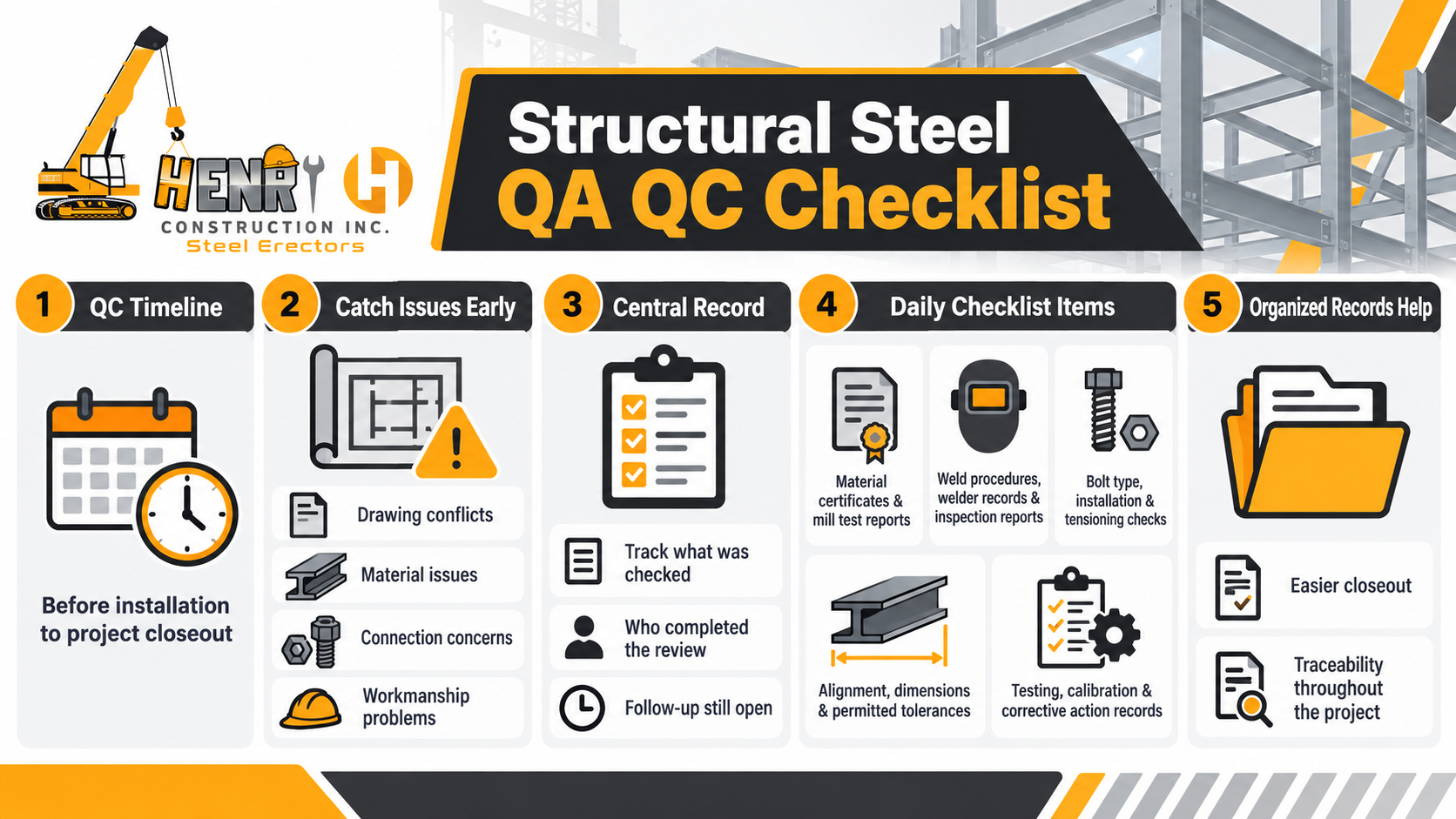
Quality control in structural steel should begin before installation and continue through project closeout. Early checks can reveal drawing conflicts, material issues, connection concerns, or workmanship problems while corrections are still easier to manage.
Our team follows clear review steps so responsibilities, acceptance needs, and records stay easy to understand. For more detail, see our steel erection quality control process and how it supports consistent field coordination.
Core Checklist Items Managers Should Track Carefully Daily
A useful structural steel QA QC checklist should cover both physical work and the documents that support each inspection. Project managers can use one central record to track what was checked, who completed the review, and whether follow-up work is still open.
- Material certificates and mill test reports
- Weld procedures, welder records, and inspection reports
- Bolt type, installation, and tensioning checks
- Alignment, dimensions, and permitted tolerances
- Testing, calibration, and corrective action records
Good records also make closeout easier. Our guide to steel fabrication quality documentation explains how organized records support traceability throughout the project.
Preconstruction Reviews Build A Strong Quality Foundation Early
Before steel arrives on site, managers should review drawings, specifications, material requirements, and inspection responsibilities. Mill certificates should match project needs, while survey control points and required inspection tools should be ready before erection begins.
At Henry H Construction Inc, we also plan when checks must happen and who is responsible for them. This early coordination helps prevent missed inspections and keeps quality activities connected to the construction schedule.
Field Inspections Keep Steel Work Moving Correctly Forward
During fabrication and erection, a structural steel inspection checklist helps crews review work at the right time instead of waiting until the end. Inspectors should compare field conditions with current drawings, project requirements, and approved procedures.
- Confirm delivered steel and identification marks
- Check weld preparation and completed welds
- Verify bolted connections and required components
- Measure line, level, plumb, and key dimensions
- Record issues before affected work continues
When tolerances matter, our steel fabrication tolerance guide offers added context for reviewing dimensions and alignment.
Welds Bolts And Alignment Need Consistent Project Verification
A structural steel QA QC checklist should give special attention to connections and frame alignment. Welds must follow approved procedures, while bolted connections should match the required type, location, components, and installation method.
Alignment checks should use reliable control points and be recorded at planned stages. If a problem appears, teams should document the condition, complete the approved correction, and verify the result before moving forward.
Testing Documentation And Corrective Actions Stay Closely Connected
Some projects require non-destructive testing, such as ultrasonic, magnetic particle, dye penetrant, or radiographic methods. The correct method depends on the weld, material, project requirements, and acceptance criteria.
- Keep current drawings and specifications available
- Store testing and inspection reports together
- Track nonconformance details and responsible parties
- Record repairs, adjustments, and final verification
- Confirm open items before project closeout
Within our team at Henry H Construction Inc, quality records stay connected to field activity so project managers can see what is complete and what still needs action.
Frequently Asked Questions
What does a steel QA QC checklist cover?
A structural steel QA QC checklist usually covers material records, welds, bolts, alignment, testing, inspection results, nonconformities, corrective actions, and final acceptance documents.
How often should structural steel inspections happen?
Inspection timing depends on project requirements and the work being performed. Some checks happen continuously, while others occur at planned milestones before the next activity begins.
Why is steel quality documentation important?
Good documentation gives teams a clear history of inspections, test results, repairs, and approvals. It also makes audits, closeout, and future review much easier.
Can quality checklists change by project?
Yes. Each project can have different drawings, specifications, standards, contract needs, and inspection responsibilities, so the checklist should match those specific requirements.
Who should manage steel quality control records?
Project managers often coordinate the process with inspectors, engineers, field supervisors, and subcontractors. Responsibilities should be clear before work starts so records remain complete.
Better Quality Planning Supports Stronger Structural Project Results
Consistent quality control in structural steel brings planning, inspections, testing, records, and corrective actions into one process. A clear structural steel QA QC checklist helps managers catch issues earlier and keep project teams aligned from preconstruction through final review.
At Henry H Construction Inc, you get practical coordination from a structural steel contractor in Indianapolis that understands field quality needs. Review our structural steel services in Indianapolis, or contact us about your project requirements.